

How to Learn Quran with Tajweed at Home has become an important question for many Muslims who want to improve their Quran recitation while learning in a comfortable and flexible environment.
Learning Tajweed helps students pronounce Quranic letters correctly, apply proper recitation rules, and read the Quran with accuracy and confidence. With the right guidance, regular practice, and a structured learning plan, beginners can make steady progress from home.
At Nour ul Quran Academy, students can learn Quran with Tajweed through organised online lessons with qualified teachers who provide step-by-step guidance based on each learner’s level. The academy focuses on helping children and adults understand Tajweed rules, improve pronunciation, and develop a stronger connection with the Holy Quran through effective online learning methods.
What Does Learning Quran with Tajweed Mean?
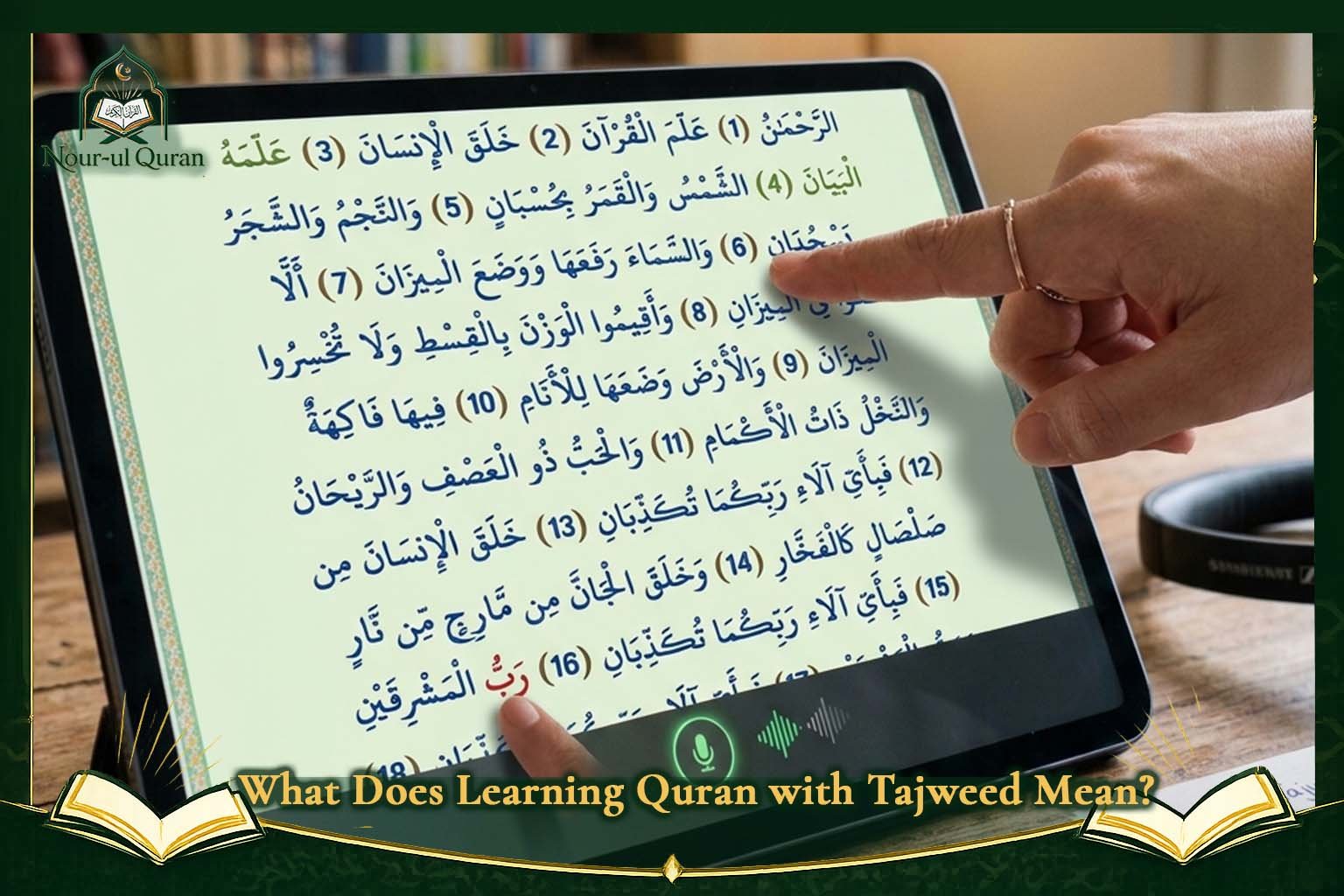
Tajweed is the science of reciting the Quran correctly according to specific pronunciation rules. The word Tajweed means improvement or making something better. In Quranic studies, it refers to giving every Arabic letter its correct pronunciation, characteristics, and required timing.
When Muslims recite the Quran, they should try their best to pronounce each letter from its proper articulation point. A small mistake in pronunciation can sometimes change the meaning of a word, which is why learning Tajweed is considered an important part of Quran education.
Tajweed focuses on several important areas, including:
- Correct pronunciation of Arabic letters.
- Understanding articulation points (Makharij).
- Applying letter characteristics (Sifaat).
- Knowing where to stop and continue reading.
- Applying rules of elongation and pronunciation changes.
- Improving the beauty and accuracy of Quran recitation.
Many beginners think Tajweed is complicated, but it becomes much easier when learned gradually with proper guidance.
Start Your Quran Learning Journey with Confidence
If you're looking for a trusted platform that combines qualified teachers, flexible scheduling, and personalized one-on-one lessons, Nour ul Quran Academy is ready to support your learning journey.
Whether you're a beginner, a parent searching for the best Quran education for your child, or someone aiming to improve Tajweed and memorisation, you'll find a structured program designed to help you succeed. Book your free trial class today and experience a supportive online learning environment that helps you build a lifelong connection with the Quran.

Why Is Tajweed Important When Learning the Quran?
The Quran was revealed with precise pronunciation and beautiful recitation. Prophet Muhammad ﷺ taught his companions how to recite the Quran correctly, and Muslims throughout generations have preserved these methods.
Learning Tajweed provides many benefits, such as:
1. Protecting the Meaning of Quranic Verses
Arabic letters have different sounds, and changing a letter or pronunciation may affect the meaning. Tajweed helps learners avoid common mistakes and maintain accurate recitation.
2. Improving Confidence
Many beginners feel nervous when reading the Quran because they are afraid of making mistakes. Learning Tajweed gradually helps students become more comfortable and confident.
3. Beautifying Quran Recitation
Tajweed does not only focus on avoiding mistakes. It also teaches proper rhythm, pauses, and pronunciation, making recitation more beautiful.
4. Building a Strong Quran Foundation
Students who learn correct pronunciation from the beginning develop stronger skills and avoid correcting repeated mistakes later.
Can You Learn Quran with Tajweed at Home?
Many people ask whether it is possible to learn Quran recitation without attending physical classes. The answer is yes. With the right approach, learning from home can provide excellent results.
The key to successful home learning is combining three important elements:
Qualified Guidance
Although books and videos are helpful, personal correction from a teacher is extremely valuable. A teacher can identify pronunciation problems that learners may not notice themselves.
Daily Practice
Tajweed requires repetition. Reading regularly helps the rules become natural during Quran recitation.
Organised Learning Plan
Random learning often creates confusion. A structured plan allows students to progress step by step from basic Arabic letters to advanced Tajweed rules.
For students who prefer flexible learning options, Live Quran Classes Online provide an opportunity to study directly with teachers while maintaining the comfort of home learning.
Step-by-Step Guide: How to Learn Quran with Tajweed at Home
Step provides a clear learning path for beginners who want to improve their Quran recitation from home. By following structured steps, practising Tajweed rules, listening to expert reciters, and receiving guidance from qualified teachers, learners can develop accurate and beautiful Quran reading skills.
Start with Arabic Letters and Sounds
Before learning advanced Tajweed rules, beginners should understand the Arabic alphabet. Each letter has a specific pronunciation and comes from a particular place in the mouth or throat. Some Arabic letters can be challenging for non-Arabic speakers, including:
- ع (Ayn)
- ح (Haa)
- خ (Khaa)
- غ (Ghayn)
- ق (Qaf)
A strong foundation in Arabic letters makes learning the Quran much easier. Beginners should practice:
- Recognizing each letter.
- Connecting letters.
- Reading simple words.
- Pronouncing letters correctly.
Many new students begin their journey through Noorani Qaida for beginners online, which provides a gradual method for learning Arabic letters, vowel sounds, and basic Quran reading skills.
Learn Basic Tajweed Rules Gradually
One common mistake among beginners is trying to memorize all Tajweed rules at once. This can make learning overwhelming.
Instead, students should focus on one rule at a time. Important beginner Tajweed topics include:
Makharij Al-Huroof (Letter Articulation Points)
Makharij explain where Arabic letters come from. Some letters come from the throat, some from the tongue, and others from the lips. Understanding articulation points helps students pronounce letters accurately.
Sifaat Al-Huroof (Characteristics of Letters)
Every Arabic letter has special characteristics.
Some letters are:
- Heavy.
- Light.
- Strong.
- Soft.
Knowing these characteristics improves Quran pronunciation.
Madd Rules (Elongation)
Madd refers to stretching certain sounds for a specific number of counts. Correct application of Madd improves rhythm and prevents pronunciation mistakes.
Noon Sakinah and Tanween Rules
These rules include:
- Izhar.
- Idgham.
- Iqlab.
- Ikhfa.
They appear frequently throughout the Quran, making them essential for every learner.
Create a Daily Quran Learning Schedule
Consistency is more important than spending many hours occasionally. A simple daily routine can create excellent progress. For example:
30-Minute Daily Plan
- 5 minutes: Review previous lessons.
- 10 minutes: Study a new Tajweed rule.
- 10 minutes: Practice Quran reading.
- 5 minutes: Listen to a skilled Quran reciter.
Even short daily sessions can produce significant improvement when maintained consistently.
Learn from Qualified Quran Teachers
Self-learning resources can support your progress, but learning directly from a qualified teacher provides faster improvement. A teacher can:
- Correct mistakes immediately.
- Demonstrate proper pronunciation.
- Explain difficult rules.
- Monitor your progress.
- Create lessons according to your level.
This personal feedback is especially important because many pronunciation mistakes cannot be recognized by learners themselves.
Many families choose structured programs that provide Quran Classes with Native Arabic Teachers because native speakers can help students develop accurate pronunciation and understand the natural sounds of Arabic letters.
Listen to Quran Recitation Every Day
Listening is one of the most powerful ways to improve Quran recitation. Before reading a new Surah or passage, listen carefully to an experienced Qari. Pay attention to:
- Letter pronunciation.
- Length of sounds.
- Places of stopping.
- Flow of recitation.
A useful technique is:
- Listen to a short verse.
- Pause the recording.
- Repeat the verse.
- Compare your pronunciation.
- Repeat until improvement appears.
Practice Quran Recitation Slowly Before Increasing Speed
Many beginners make the mistake of trying to read quickly because they think speed means improvement. However, correct Quran recitation depends on accuracy before speed.
When you practice slowly, you have more time to focus on:
- Correct pronunciation of each letter.
- Applying Tajweed rules properly.
- Giving every letter its required time.
- Making correct pauses.
- Avoiding common mistakes.
Slow reading creates strong habits. After your pronunciation becomes accurate, your reading speed will naturally improve.
A learner who reads one page correctly every day will usually achieve better results than someone who reads many pages without focusing on pronunciation.
The goal of Quran learning is not simply finishing more pages. The goal is to develop a correct and beautiful recitation that follows the rules of Tajweed.
Record Your Voice and Review Your Mistakes
One of the most effective techniques for improving Quran recitation at home is recording your own voice.
Many students do not notice their mistakes while reading because their attention is focused on the words in front of them. Listening to a recording allows you to evaluate your recitation more objectively.
When reviewing your recording, check:
- Are Arabic letters pronounced correctly?
- Are long vowels extended properly?
- Are stopping points correct?
- Are Tajweed rules applied consistently?
- Does your recitation sound clear?
You can compare your recording with a qualified Qari and identify areas that need improvement. This simple practice helps learners become more independent and aware of their progress.
Combine Memorisation with Tajweed Practice
Some students memorise Quran verses first and plan to learn Tajweed later. Although memorisation is valuable, learning correct pronunciation from the beginning is much better.
When you memorise a new Surah or passage:
- Listen to the verses from a reliable reciter.
- Read the verses with a teacher.
- Understand the Tajweed rules included in the passage.
- Memorise while maintaining correct pronunciation.
- Review regularly.
Combining memorisation and Tajweed prevents learners from repeating incorrect pronunciation habits.
A strong memorisation foundation should always include proper recitation.
How Can Children Learn Quran with Tajweed at Home?
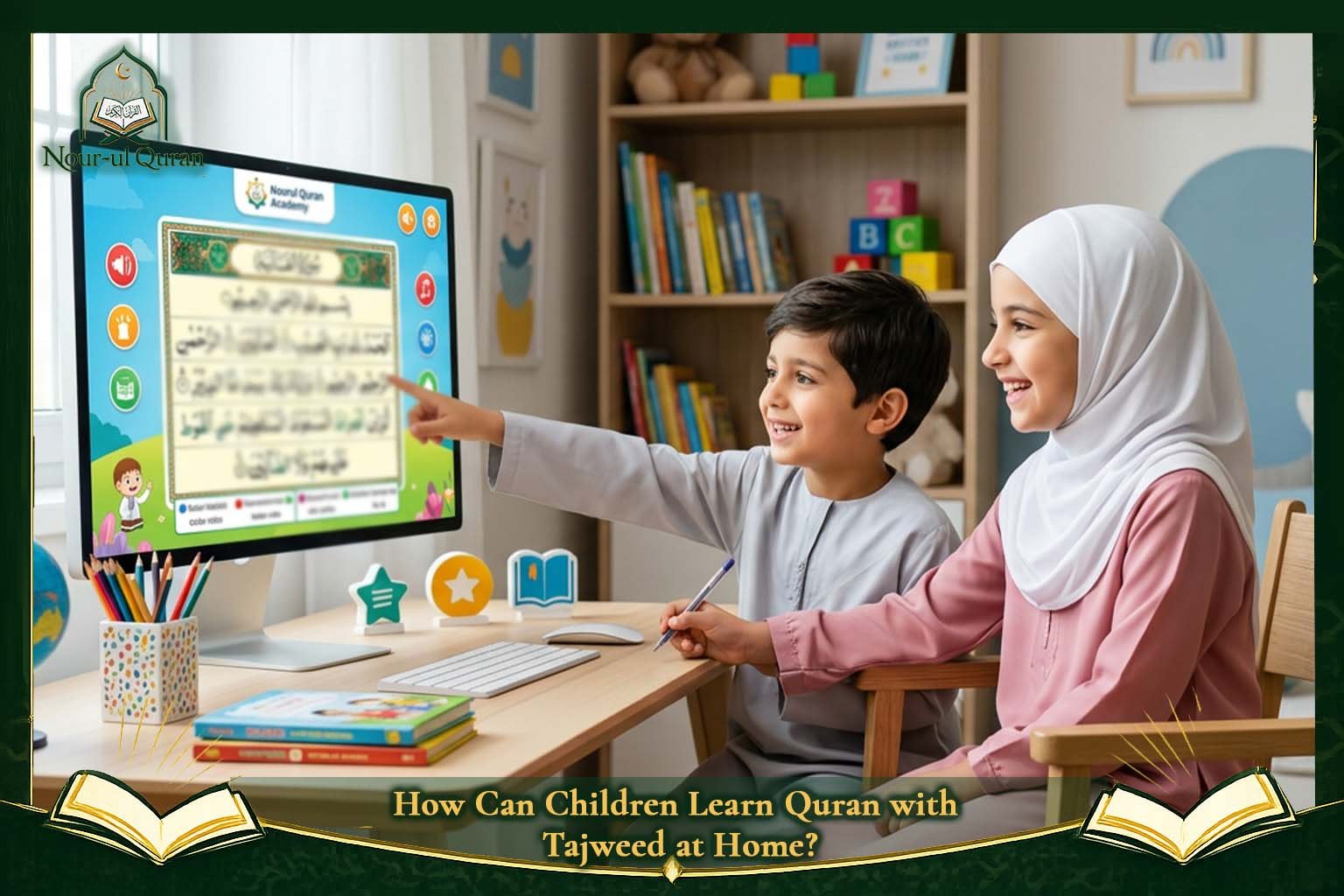
Children have a special ability to learn languages and pronunciation when they receive consistent support. However, Quran education for children should be designed according to their age, attention span, and learning style.
Parents should focus on creating a positive relationship between children and the Quran.
Effective methods include:
Establish a Fixed Quran Time
Children benefit from routine. Choosing a specific time every day helps Quran learning become a natural habit. For example:
- After school.
- After Maghrib prayer.
- During a quiet family time.
Regular timing creates discipline and reduces resistance.
Make Lessons Interactive
Children learn better when lessons include different activities. Parents and teachers can use:
- Repetition exercises.
- Simple examples.
- Listening activities.
- Encouraging feedback.
- Short learning sessions.
Long lessons may make children lose interest, especially at beginner levels.
Choose Age-Appropriate Teaching Methods
Young learners need patient teachers who understand how children think and learn. Good children's Quran programs focus on:
- Basic Arabic reading.
- Correct pronunciation.
- Simple Tajweed rules.
- Memorization techniques.
- Building love for the Quran.
Parents searching for suitable children's programs should look for courses that include Tajweed rules for kids with teaching methods designed specifically for young learners.
The Role of Parents in Quran Education
Parents play a vital role in supporting their children’s Quran learning journey. Although parents may not always have advanced knowledge of Quran recitation or Tajweed, their encouragement, involvement, and positive attitude can make a significant difference in a child’s progress.
A child’s success in learning the Quran is not only connected to the teacher’s efforts but also to the support they receive at home. When children feel that their parents care about their learning, they become more confident, motivated, and willing to continue improving.
Parents can support Quran education in many effective ways, including:
Listening to Children Read
One of the simplest ways parents can encourage their children is by listening to them while they read or memorize Quran. Showing interest in their lessons makes children feel valued and motivates them to practice regularly.
Parents can ask their children to recite a newly learned Surah, listen carefully, and encourage their efforts. Even small words of appreciation can create a positive learning experience.
Celebrating Small Achievements
Recognizing children’s progress helps build confidence and keeps them motivated throughout their Quran learning journey. Parents should celebrate both major and small achievements, because every step forward represents valuable effort.
Examples of achievements that deserve encouragement include:
- Completing a new Quran lesson.
- Improving pronunciation and recitation.
- Memorizing a short Surah.
- Learning a new Tajweed rule.
- Maintaining regular practice.
Simple rewards, kind words, or family appreciation can encourage children to continue working toward their goals.
Practicing Quran Together
Creating family Quran time is one of the best ways to strengthen a child’s connection with the Quran. When parents and children read or review Quran together, learning becomes a shared and enjoyable experience.
Family practice can include:
- Reading Quran together daily.
- Reviewing previously memorized verses.
- Discussing simple meanings of verses.
- Encouraging siblings to learn together.
This approach helps children develop a love for the Quran and understand that learning it is an important part of family life.
Creating a Supportive Home Environment
A positive home environment can make Quran learning easier and more enjoyable. Parents can help by setting a regular study time, reducing distractions, and providing a comfortable place for learning.
It is also important to avoid excessive pressure or comparison with other children. Every child learns at a different pace, and patience plays an important role in building confidence.
By combining encouragement, patience, and consistent support, parents can help their children develop strong Quran learning habits. A supportive family environment works together with qualified teachers to make the Quran learning journey more successful and meaningful.
How Can Adults Learn Quran with Tajweed at Home?
Many adults postpone learning the Quran because they believe it is too late to start. However, adults can successfully learn Quran with Tajweed at home through commitment, patience, and regular practice. Adult learners often have important advantages, such as better focus, strong motivation, and clear personal goals.
Learning from home provides flexibility and allows adults to study according to their schedules while receiving guidance from qualified teachers. The key is to follow a simple and organized learning plan.
Start from Your Current Level
Every learner has a different starting point. Some adults may need to improve their Arabic pronunciation, while others may begin with basic Quran reading skills. Avoid comparing yourself with advanced readers and focus on your own progress.
Accept Mistakes as Part of Learning
Mistakes are a natural part of learning Quran recitation. Each correction helps improve pronunciation and brings the learner closer to reading the Quran correctly.
Set Realistic Goals
Small goals make learning easier and increase confidence. Examples include:
- Learning new Arabic letters.
- Completing one Tajweed rule.
- Reading one Quran page correctly.
- Memorizing a short Surah.
With consistent practice and proper guidance, adults can improve their Quran recitation and build a stronger connection with the Quran from the comfort of their homes.
Common Challenges When Learning Quran with Tajweed at Home
Although learning Quran with Tajweed at home offers flexibility and convenience, some students may face challenges during their learning journey. Understanding these difficulties and knowing how to overcome them helps learners stay motivated and continue improving.
Challenge 1: Lack of Consistency
Many learners start with great enthusiasm but find it difficult to maintain regular practice over time. Without a clear routine, progress may become slower.
Solution:
Create a realistic daily schedule and dedicate a specific time for Quran practice. Even a short daily session can make a big difference. Practicing for twenty minutes every day is more effective than studying for several hours only once a month.
Challenge 2: Difficulty Pronouncing Arabic Letters
Some Arabic letters have unique sounds that may be unfamiliar to non-Arabic speakers. Learning the correct pronunciation requires patience and continuous practice.
Solution:
Practice each letter separately and receive correction from a qualified Quran teacher. Focus on improving the pronunciation of basic letters before moving to more advanced reading skills.
Challenge 3: Forgetting Tajweed Rules
Some students learn Tajweed rules but struggle to remember them because they do not apply them regularly during Quran recitation.
Solution:
Practice each new rule while reading actual Quran verses. Applying Tajweed in daily recitation helps make the rules easier to remember and use naturally.
Challenge 4: Feeling Discouraged
Beginners may compare their progress with experienced reciters and feel that learning is taking too long. This can reduce motivation and confidence.
Solution:
Focus on personal improvement instead of comparing yourself with others. Every skilled Quran reciter started as a beginner, and progress comes through patience, practice, and continuous effort.
By understanding these challenges and following the right learning approach, students can overcome obstacles and continue their journey toward better Quran recitation with Tajweed.
Benefits of Learning Quran with Tajweed at Home
Learning Quran with Tajweed at home provides many benefits for students and families. It offers a flexible and comfortable way to improve Quran recitation while receiving proper guidance from qualified teachers.
Flexible Schedule
Home-based learning allows students to choose lesson times that match their daily responsibilities. This is especially helpful for:
- Working adults.
- Students.
- Parents.
- Busy families.
Comfortable Learning Environment
Studying Quran at home helps learners feel relaxed and focused. A familiar environment can reduce stress, especially for beginners who need extra confidence while learning pronunciation and Tajweed rules.
Personalized Learning Pace
Every student learns differently. Some learners need more time to master Arabic pronunciation, while others progress faster. Home learning allows each student to move according to their own abilities and receive lessons that match their level.
Access to Qualified Teachers
Online Quran education makes it easier to connect with experienced Quran teachers from different locations. Students can learn from qualified instructors without traveling long distances, making Quran learning more accessible and convenient.
With the right program and regular practice, learning Quran with Tajweed at home can become an effective and enjoyable journey.
How Technology Helps You Learn Quran with Tajweed?
Technology has transformed Quran education by making learning more accessible. Modern tools include:
- Online Quran lessons.
- Digital Quran applications.
- Audio recitations.
- Video explanations.
- Virtual classrooms.
- Online progress tracking.
However, technology should be used wisely. Students should avoid depending only on automated tools because Tajweed requires human feedback and correction. The best results come from combining technology with professional teaching.

Choosing the right online Quran program is an important step for successful learning. A suitable program should provide qualified teachers, an organized learning plan, and support that helps students improve their Quran recitation and Tajweed skills.
Before joining any course, consider:
Teacher Experience
A qualified teacher should have strong Quran knowledge, proper qualifications, and experience teaching students at different levels. The teacher should also be patient and able to explain lessons clearly.
Teaching Method
Choose a program that offers:
- Structured lessons.
- Regular practice.
- Personal feedback.
- Clear learning goals.
Student Support
Good programs provide continuous guidance, track student progress, and encourage learners to stay motivated.
A suitable learning environment makes learning Quran easier, more effective, and more enjoyable.
Why Professional Guidance Makes a Difference?
Although many resources are available online, professional guidance remains one of the fastest ways to improve Quran recitation.
A teacher can recognize small mistakes that students may never notice alone. Professional instruction helps learners:
- Build correct pronunciation habits.
- Understand difficult Tajweed concepts.
- Avoid repeated errors.
- Improve confidence.
- Progress faster.
Students who receive regular feedback usually develop stronger recitation skills compared with learners who depend only on self-study.
How to Stay Motivated During Your Quran Learning Journey?
Learning the Quran with Tajweed is a long-term journey that requires patience, dedication, and continuous effort. Some learners become excited at the beginning but lose motivation when progress seems slow. Understanding that improvement happens gradually helps students continue with confidence.
Motivation becomes stronger when learners focus on the purpose behind their efforts. Learning Quran recitation is not only about improving pronunciation; it is also about strengthening the relationship with Allah and developing a lifelong connection with His words. Here are practical ways to maintain motivation:
Set Small and Achievable Goals
Large goals can sometimes feel overwhelming. Instead of focusing only on completing an entire Quran or mastering all Tajweed rules quickly, divide your journey into smaller steps. Examples of realistic goals include:
- Learning one Tajweed rule each week.
- Improving the pronunciation of specific letters.
- Reading a few pages daily.
- Memorizing short Surahs with correct recitation.
Small achievements create confidence and encourage continued progress.
Track Your Improvement
Many learners do not realise how much they improve because they only focus on their mistakes. Keeping track of your progress helps you see your development over time.You can record:
- New Tajweed rules you learned.
- Surahs you improved.
- Pronunciation challenges you overcame.
- Reading speed improvements.
Looking back at your earlier recordings can show how far you have progressed.
The Importance of Revision in Quran Learning
Revision is one of the most important parts of mastering Quran recitation. Without regular review, students may forget previously learned rules or make old pronunciation mistakes again. A successful revision system should include:
Daily Review
Spend a few minutes reviewing previous lessons before starting something new. This strengthens memory and keeps Tajweed rules active.
Weekly Review
At the end of every week, revise everything you learned during the previous days. This helps connect different rules.
Regular Quran Reading
Applying Tajweed while reading Quran regularly is the best way to transform theoretical knowledge into practical skill. The more you practice, the more naturally the rules become part of your recitation.
How to Create an Effective Home Quran Learning Environment
The learning environment has a major impact on concentration and consistency.A suitable Quran study area should be:
Quiet and Comfortable
Choose a place away from unnecessary distractions. Turn off notifications and dedicate this time completely to Quran learning.
Organized
Keep your Quran, notes, and learning materials ready before starting your lesson. Preparation saves time and helps you focus.
Spiritually Positive
Approach Quran learning with sincerity and patience. A calm mindset improves concentration and makes learning more enjoyable.
Mistakes to Avoid When Learning Quran with Tajweed at Home
Many beginners experience slow progress because of common mistakes. Avoiding these problems can make the learning process much easier.
1. Learning Without a Clear Plan
Jumping between random lessons can create confusion. A structured program helps students understand what to learn first and what comes next.
2. Ignoring Pronunciation Corrections
Some learners focus only on reading more pages without correcting mistakes. Accuracy should always come before quantity.
3. Changing Learning Methods Frequently
Using many different teachers, apps, and resources at the same time can make students confused.Choose a reliable method and follow it consistently.
4. Memorizing Without Correct Recitation
Memorizing verses with incorrect pronunciation can create difficult habits to fix later. Always learn the correct pronunciation before memorizing large amounts.
5. Expecting Immediate Results
Tajweed is a skill that develops through repetition. Patience and consistency are essential for success.
Self-Learning vs Learning with a Quran Teacher
Many students wonder whether they should learn Quran independently or study with a qualified teacher. Both methods can support Quran learning, but each one has different benefits and limitations. Choosing the right approach depends on the learner’s goals, experience level, and need for guidance.
Benefits of Self-Learning
Self-study gives learners more flexibility and allows them to practice at their own pace. It can be useful for reviewing lessons and strengthening skills outside regular classes.
Self-learning allows students to:
- Study at a convenient time.
- Repeat lessons whenever needed.
- Use online resources and educational materials.
- Practice Quran reading independently.
- Review previously learned verses regularly.
However, self-learning may have some challenges. Students may not notice pronunciation mistakes or apply Tajweed rules incorrectly without proper feedback from an experienced teacher.
Benefits of Learning with a Quran Teacher
Learning with a qualified Quran teacher provides guidance and support throughout the learning journey. A teacher can identify mistakes, explain difficult rules, and help students improve their recitation step by step.
A Quran teacher provides:
- Immediate correction of reading mistakes.
- Personalized lessons based on the student’s level.
- Better understanding of Tajweed rules.
- Motivation and continuous encouragement.
- A structured learning plan.
For beginners especially, learning with a teacher can make the process easier and more effective. Combining personal practice with professional guidance often provides the best results, helping students improve their Quran recitation with confidence and consistency.
How Long Does It Take to Learn Quran with Tajweed?
The time required depends on several factors:
- Previous Arabic knowledge.
- Daily practice time.
- Learning method.
- Teacher guidance.
- Personal dedication.
Some beginners notice improvement within a few months, while achieving strong Tajweed skills may require longer continuous practice. The important factor is not how quickly you finish, but how accurately you learn.
A student who practices consistently for a short time every day can achieve better results than someone who studies irregularly for many hours.
The Best Way to Improve Quran Recitation at Home
Improving Quran recitation at home requires a clear plan, regular practice, and continuous effort. The most effective approach is to combine learning Tajweed rules with practical application and guidance from a qualified teacher. A successful learning strategy includes these important steps:
1. Learn the Rule
Start by understanding the Tajweed rule clearly. Knowing the reason behind each rule helps students apply it correctly while reading the Quran.
2. Listen to Examples
Listening to skilled Quran reciters helps learners recognize the correct pronunciation and understand how Tajweed rules are applied in actual verses.
3. Practice Slowly
Apply each new rule while reading Quran at a comfortable pace. Slow and careful practice helps improve accuracy and prevents repeating mistakes.
4. Receive Feedback
A qualified teacher can identify pronunciation errors and provide helpful corrections. Regular feedback ensures that the learner continues improving in the right direction.
5. Repeat Regularly
Consistent repetition helps Tajweed rules become easier and more natural during recitation. Daily practice, even for a short time, can lead to noticeable progress.
By following this step-by-step approach, learners can turn Tajweed knowledge into practical recitation skills and develop a stronger, more confident Quran reading ability at home.
Supporting Your Children’s Quran Learning Journey
Parents often search for effective ways to introduce their children to Quran education. The most successful approach combines patience, encouragement, and suitable teaching methods. Children need:
- Positive encouragement.
- Short and engaging lessons.
- Regular practice.
- Patient teachers.
- A supportive family environment.
The goal should not only be completing lessons but developing love and respect for the Quran.
Programs focused on children's education should include simple explanations, interactive activities, and gradual introduction to pronunciation rules.
Why Learning Quran with Tajweed Is a Lifelong Investment?
The benefits of Quran learning continue throughout a person's life.A strong foundation in Tajweed helps Muslims:
- Recite Quran confidently.
- Teach family members.
- Improve their worship.
- Maintain accurate pronunciation.
- Build a deeper spiritual connection.
Unlike many skills that may become less useful over time, Quran knowledge remains valuable throughout life.
How to Learn Quran with Tajweed at Home Successfully?

Understanding how to learn quran with Tajweed at home begins with recognizing that success comes from consistency, proper guidance, and sincere effort.
Learning Quran recitation does not require perfection from the beginning. Every learner starts with simple steps: recognizing Arabic letters, improving pronunciation, understanding Tajweed rules, and practicing regularly. The most effective approach includes:
- Building a strong foundation.
- Following a structured learning plan.
- Practicing every day.
- Listening to skilled reciters.
- Receiving correction from qualified teachers.
- Reviewing regularly.
Whether you are a beginner, an adult returning to Quran study, or a parent helping your children, home-based Quran learning can provide a comfortable and successful path.
With dedication and the right resources, anyone can improve their Quran recitation and develop confidence while learning from the comfort of home.
Frequently Asked Questions (FAQ) about How to Learn Quran with Tajweed at Home
This section answers the most common questions about learning Quran with Tajweed at home, including beginner steps, learning duration, online classes, and the best methods for improving Quran recitation.
Can I learn Quran with Tajweed at home if I do not know Arabic?
Yes. Many beginners start their Quran journey without any previous Arabic knowledge. The best approach is to begin with Arabic letters, basic reading skills, and gradual Tajweed lessons.
With regular practice and proper guidance, learners can develop accurate Quran pronunciation step by step.
What is the easiest way to learn Quran with Tajweed at home?
The easiest method is to follow a structured learning plan that combines beginner reading lessons, Tajweed instruction, daily practice, listening exercises, and teacher feedback.
Avoid trying to learn everything at once. Gradual progress creates stronger results.
How long should I practice Quran Tajweed every day?
A daily practice session of 20 to 30 minutes can be highly effective when done consistently. The quality of practice matters more than the number of hours.
Can children learn Tajweed from home?
Yes. Children can learn Tajweed successfully at home when they receive age-appropriate lessons, patient instruction, and regular encouragement. Starting early helps children develop correct pronunciation habits.
Do I need a teacher to learn Quran with Tajweed?
While self-learning resources can help, a teacher provides important benefits such as correcting pronunciation mistakes and explaining difficult rules. Personal feedback usually makes learning faster and more accurate.
What is the role of online Quran classes in Tajweed learning?
Online Quran classes provide flexible access to qualified teachers and organized lessons. They allow students to receive direct instruction while studying from home.
Many learners choose online programs because they combine convenience with professional guidance.
In conclusion, learning the Quran with Tajweed at home is a valuable opportunity for anyone who wants to improve their recitation and learn the correct rules of Quran reading in a flexible and organized way. With the growth of online Quran programs, accessing qualified teachers and structured lessons has become easier than ever.
Success in the Quran learning journey depends on consistency, patience, and regular practice, along with choosing a suitable program that provides proper guidance and continuous support. Whether the goal is improving pronunciation, mastering Tajweed rules, or developing Quran reading skills, a well-organized learning approach helps students achieve clear progress.
By combining regular practice, listening to correct recitations, and receiving feedback from qualified teachers, learners can build greater confidence in their Quran recitation. Therefore, starting Quran learning at home today is an important step toward improving reading skills and developing a stronger connection with the Book of Allah in a correct and lasting way.

Add New Comment