

Online Quran Memorization Classes: A Practical Parent's Guide
Memorizing the Quran, known as Hifz, is one of those goals that sounds almost impossibly big when you first think about it. Over six thousand verses, committed to memory word for word, in a language most people learning it didn't grow up speaking. It's no surprise that a lot of parents, and plenty of adults considering it for themselves, wonder whether this is something that can genuinely be achieved through online classes, or whether it really requires sitting physically in front of a teacher for years.
The honest answer is that online Quran memorization classes work, and work well, when they're structured properly. Hifz has always relied on a specific method built around repetition, review, and consistent correction, and that method translates to video calls far better than most people assume, as long as the program follows the traditional approach rather than cutting corners.
This guide covers exactly how online Hifz programs work, what a realistic timeline actually looks like, how to keep a child or yourself motivated through what is genuinely a long journey, and what separates a serious memorization program from one that's just reciting verses together without real structure behind it.
How Traditional Quran Memorization Actually Works?
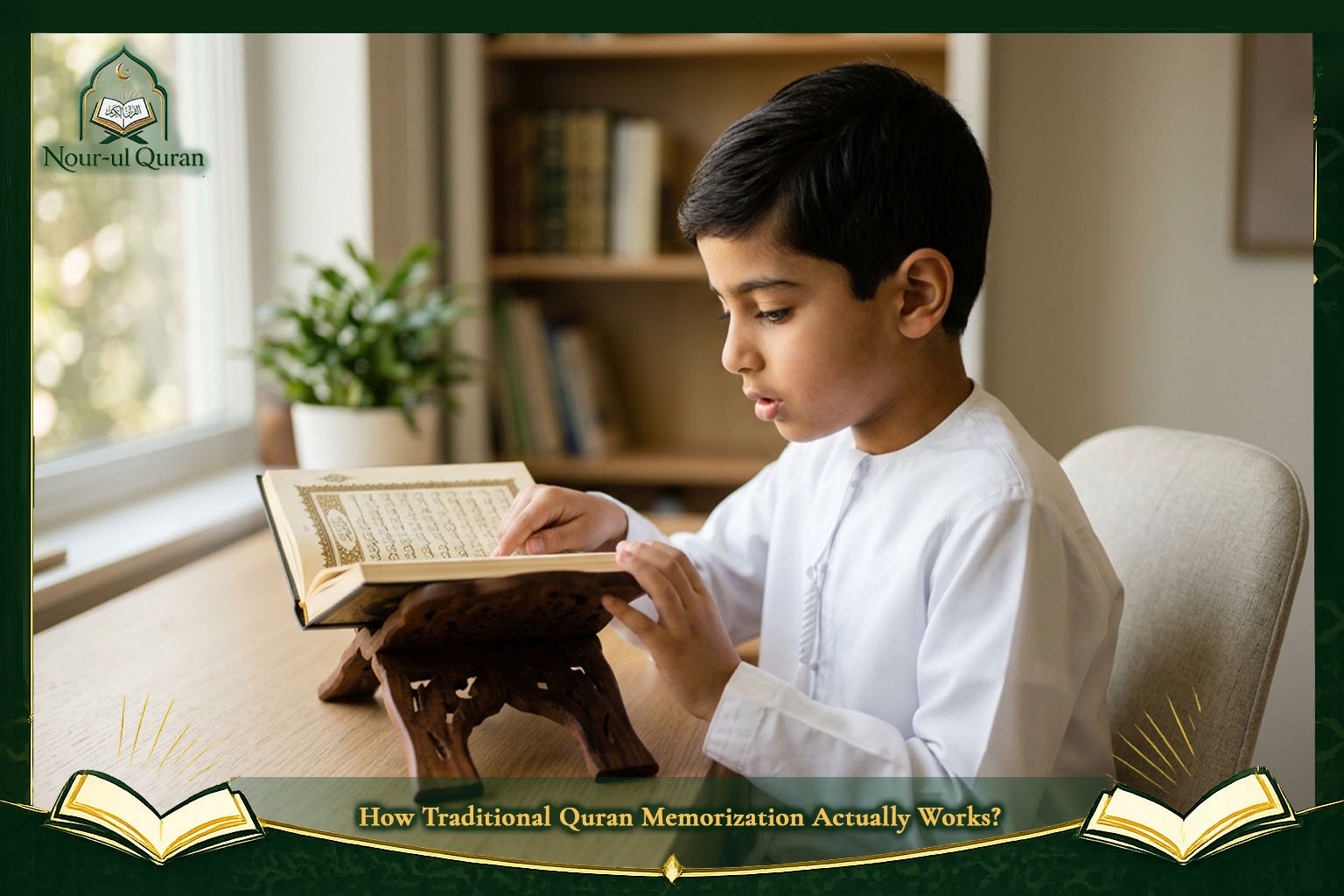
Before getting into the online side of things, it helps to understand the method itself, since a good online program follows the exact same structure used in memorization programs around the world, whether in person or not.
Sabaq, the new memorization. This is the new portion being memorized in a given session, typically a small, manageable chunk, maybe a few lines or half a page depending on the student's level and pace.
Sabqi, recent review. This covers everything memorized over roughly the past week or so, reviewed regularly to move it from short term into more solid, longer term memory.
Manzil, older review. This is the review of everything memorized further back, sometimes going all the way back to the very beginning of a student's Hifz journey. Manzil is honestly the part that gets skipped or shortened most often in poorly run programs, and it's also the part that matters most for retention over years, not just weeks.
A serious Hifz program balances all three of these consistently. New memorization without solid review eventually collapses, since verses memorized months or years ago fade without regular reinforcement. This is exactly why some students who "finished" memorizing the Quran years ago struggle to recall large portions later, when the review structure wasn't maintained properly during or after their memorization journey.
Memorize the Quran with Expert Online Guidance
Make your Quran memorization journey more organized and consistent with Online Quran Memorization Classes at Nour Ul Quran Academy. Our qualified Quran teachers guide students through personalized memorization plans while helping them improve revision, retention, and recitation.
Whether you are starting from the beginning or continuing your Hifz journey, our online classes offer convenient learning from home. Regular teacher feedback can help students stay motivated and progress confidently. Join Nour Ul Quran Academy today and start building a stronger connection with the Quran through dedicated memorization lessons.

Why Online Hifz Classes Genuinely Work?
A fair question a lot of parents ask upfront: can a teacher really catch memorization mistakes over a video call the same way they would in person? In practice, yes, and here's why.
Audio correction doesn't actually require physical presence. Catching a mispronounced letter, a skipped word, or an incorrect stop in recitation relies almost entirely on hearing clearly, not on being physically in the same room. A stable video call with decent audio quality allows a tutor to catch these mistakes just as effectively as sitting beside a student with an open mushaf.
One on one online sessions often allow for more individualized pacing than a crowded in person class. In many physical Hifz programs, especially group ones, a teacher is managing multiple students simultaneously, which naturally limits how much individual attention any one student gets in a session. A dedicated one on one online session flips that, with the tutor's full attention on a single student's pace and mistakes throughout.
Consistency becomes easier, not harder. A physical Hifz class often depends on a student being physically present, which means illness, weather, or family schedule conflicts regularly disrupt attendance. Online classes remove a lot of that friction, since illness that would prevent leaving the house doesn't necessarily prevent a video call, and there's no commute time eating into an already tight schedule.
What a Good Online Memorization Program Actually Includes?
Not every program calling itself a "Hifz class" is structured with the same seriousness. Here's what to look for specifically.
A Genuine Sabaq, Sabqi, Manzil Structure
Ask directly how a typical session is structured. If new memorization is the only real focus, with little to no dedicated review time, that's a warning sign. Review isn't optional extra credit in Hifz, it's the mechanism that actually makes long term retention possible.
Realistic, Individualized Pacing
Be wary of programs that promise a fixed, aggressive timeline for everyone, regardless of age or ability. Memorization pace varies enormously between individuals, and a good tutor adjusts the amount of new material based on how a specific student is actually retaining it, not a generic schedule designed to sound impressive in marketing material.
Proper Tajweed Woven Throughout
Memorizing verses with incorrect pronunciation locked in from the start creates problems that are far harder to fix later than they would have been to prevent early on. A serious memorization program corrects Tajweed continuously throughout the memorization process itself, not as a separate subject taught at some other time.
Consistent, Documented Progress Tracking
Given how much memorization depends on long term review, tracking exactly what's been memorized, when it was last reviewed, and where weak spots exist is essential. Ask how a program tracks this, ideally with regular reports so you as a parent, or you as an adult student, always know precisely where things stand.
Teachers With Real Ijazah in Quran Recitation
Ijazah is a formal certification, a chain of authorization tracing back through qualified scholars, confirming that a teacher has mastered correct Quran recitation to a genuinely verified standard. This matters enormously for memorization specifically, since a teacher without solid personal mastery of correct recitation can inadvertently pass along their own errors to a student over years of lessons.
Realistic Timelines for Quran Memorization

This is probably the single most common question parents and adult students ask, and it's worth answering honestly rather than with an inflated marketing number.
For a child starting Hifz at a young age, studying consistently, completing memorization of the entire Quran often takes anywhere from three to five years, sometimes longer, depending heavily on how many hours per week are dedicated to it, natural aptitude, and how much review time is built in alongside new memorization. Programs promising to complete the entire Quran in under a year for a typical student, without extraordinarily intensive daily hours, should be approached with some healthy skepticism.
For an adult starting Hifz, timelines vary even more widely, since adult schedules are often more constrained than a child fully immersed in a dedicated memorization program. Adults memorizing a few verses a week consistently, alongside work and family responsibilities, might take considerably longer for the complete Quran, though many adults choose to focus on memorizing specific chapters or portions relevant to their daily prayers rather than pursuing complete memorization, which is an entirely valid and common goal in itself.
What matters most isn't hitting a specific timeline, it's maintaining consistency over the long run. A student memorizing steadily, even slowly, with solid review habits, ends up retaining far more years later than a student who moved faster but skipped proper review along the way.
What a Typical Memorization Session Looks Like?
A typical online Hifz session usually opens with recitation of the Sabqi, the recent review portion, giving the tutor a chance to catch and correct any slippage from recent memorization before moving forward. This is followed by review of the Manzil, older material, on a rotating basis so everything gets revisited regularly without needing to review the entire previous memorization every single session.
New memorization, the Sabaq, typically comes next, with the tutor listening closely as the student recites the new portion, correcting pronunciation and Tajweed errors in real time before moving forward. Sessions usually end with the tutor outlining exactly what to practice before the next session, both the new portion and specific review material.
For younger children, sessions are often kept shorter and include more encouragement and positive reinforcement built throughout, since maintaining motivation over what is genuinely a multi year journey matters just as much as the technical memorization process itself.
Keeping a Child (or Yourself) Motivated Through a Long Journey
 Motivated Through a Long Journey.jpg)
Hifz is a marathon, not a sprint, and motivation naturally has ups and downs over months and years. A few things genuinely help maintain it.
Celebrate completed portions, not just the eventual finish line. Finishing an entire chapter, or reaching a milestone like completing the shorter final portion of the Quran, deserves real acknowledgment. Waiting until complete memorization to celebrate anything makes an already long journey feel even longer.
Keep review sessions from feeling like punishment. If Manzil review only happens when new memorization has been going poorly, it starts to feel like a penalty rather than a normal, essential part of the process. Framing regular review as simply how Hifz works, for every student, prevents this association.
Build in genuine rest, not just pushing through fatigue. Burnout is one of the most common reasons students, especially children, disengage from memorization long term. A sustainable pace that includes appropriate breaks tends to produce better long term outcomes than an aggressive schedule that risks exhaustion.
Connect memorized verses to their meaning where possible. Understanding roughly what a verse means, even at a basic level, makes it considerably easier to retain long term compared to memorizing pure sound without any comprehension attached. This is part of why combining memorization with some Arabic or tafsir learning tends to produce stronger long term retention.
Involve family in the process, even in small ways. For children specifically, hearing a parent express genuine interest, asking to hear a recently memorized portion, celebrating milestones as a family, reinforces that this effort matters at home, not only during scheduled lessons.
Common Concerns Parents and Adult Students Raise
"What if progress is slower than other students we hear about?" Comparison is almost always unhelpful here. Pace depends on so many individual factors, age, hours dedicated, natural retention ability, that comparing one student's timeline to another's rarely reflects anything meaningful about either person's actual progress.
"What happens if we need to pause for a while?" Life circumstances sometimes require a break, illness, travel, a busy period at work or school. A good program can help rebuild momentum after a pause through a structured review of previously memorized material before resuming new memorization, rather than treating a pause as some kind of failure.
"Is it worth starting Hifz if we're not sure we'll complete the entire Quran?" Absolutely. Memorizing any portion of the Quran carries real value, and plenty of committed Muslims memorize substantial portions relevant to their daily prayers without pursuing complete memorization, which remains a meaningful and worthwhile goal in itself.
"How do we know the teacher's own recitation is accurate?" This is exactly why Ijazah and formal certification matter so much when choosing a program. Ask directly about a teacher's own certification chain rather than assuming general Quran knowledge automatically includes verified, accurate recitation mastery.
Why Families and Adult Students Choose Nour-ul Quran Academy for Hifz?
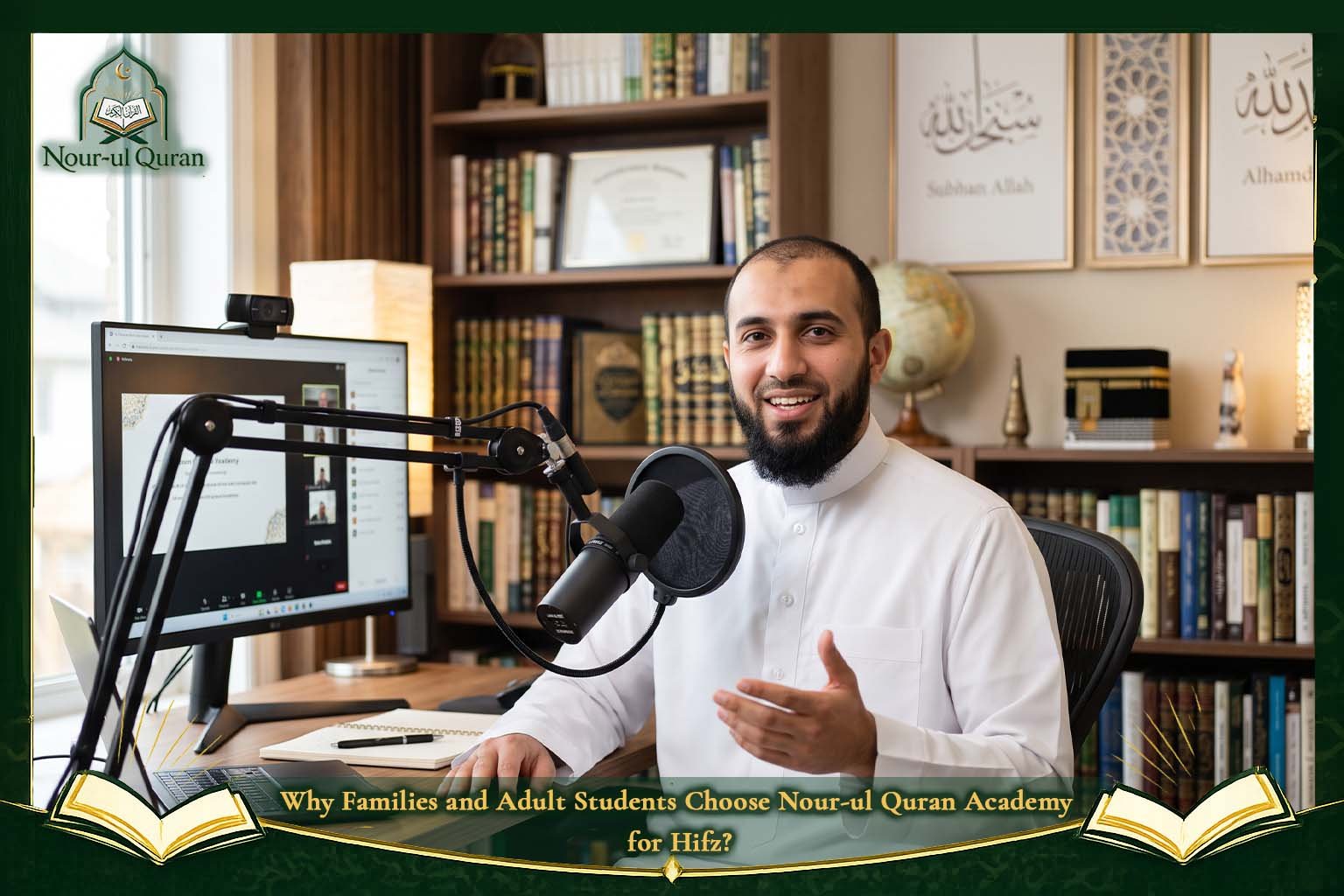
At Nour-ul Quran Academy, our memorization program follows the traditional Sabaq, Sabqi, Manzil structure closely, rather than focusing purely on new memorization at the expense of long term review. Our tutors hold genuine Ijazah in Quran recitation and are Al Azhar trained, meaning the recitation being passed on to students has been properly verified through a real scholarly chain.
Every session is live and one on one over Zoom, allowing pacing to be adjusted individually rather than following a fixed, generic timeline that doesn't account for a specific student's actual retention and schedule. We send regular, detailed progress reports so parents and adult students alike always know exactly what's been memorized, what needs review, and where any weak spots exist.
We work with both children and adult students pursuing memorization, whether the goal is complete Hifz over several years or memorizing specific portions relevant to daily prayer and personal growth. Classes run seven days a week across all time zones, making it realistic to maintain the frequent, consistent sessions that memorization genuinely depends on.
Frequently Asked Questions
At what age can a child start Quran memorization classes? Most programs, including ours, can begin working on memorization with children from around age five or six, often alongside basic Arabic reading if a child hasn't yet mastered that foundation.
Can adults realistically pursue Quran memorization alongside work and family life? Yes. Many adults successfully memorize meaningful portions of the Quran through consistent, even if modest, weekly commitment. Complete memorization takes longer for adults juggling other responsibilities, but steady progress on any scale remains entirely achievable.
How many sessions per week are recommended for memorization specifically? Three to five sessions weekly tends to work well for students focused specifically on Hifz, since frequent review is essential to the method, though this can be adjusted based on individual schedule and goals.
What happens if a student forgets previously memorized material? This is a completely normal part of the process and exactly why Manzil review exists. A good tutor incorporates dedicated review time specifically to reinforce older memorization and catch fading retention before it becomes a bigger issue.
Do I need to already read Arabic fluently before starting memorization? Not necessarily, though a solid foundation in Arabic reading and basic Tajweed generally makes the memorization process smoother. Many programs, including ours, can work on foundational reading skills alongside early memorization for students who need it.
Final Thoughts
Online Quran memorization classes genuinely work when they follow the same disciplined structure that's always defined proper Hifz instruction, consistent new memorization balanced carefully with thorough review, corrected pronunciation from the very beginning, and realistic pacing that respects an individual student's actual capacity rather than an arbitrary timeline.
Whether the goal is complete memorization of the Quran over several patient years, or steady progress on specific portions meaningful to daily life, what matters most is consistency, a properly qualified teacher, and a program built around genuine retention rather than rushing toward an impressive sounding milestone.
If you'd like to see how a real memorization session works, Nour-ul Quran Academy offers a trial class so you or your child can experience the actual teaching approach firsthand before committing to a longer term program.