
Quran translation course online options help students bridge the gap between reciting Arabic and truly grasping what each verse conveys in their own language. Many students recite fluently for years while the actual meaning remains just out of reach without a translation.
At Nour ul Quran Academy, tutors guide students through verse-by-verse translation, connecting Arabic wording directly to accurate English meaning. This article explains what the course covers, how it differs from tafsir study, and who benefits most from this focused approach. It also covers pacing and common questions families ask before enrolling.
How Translation Study Differs From Tafsir?
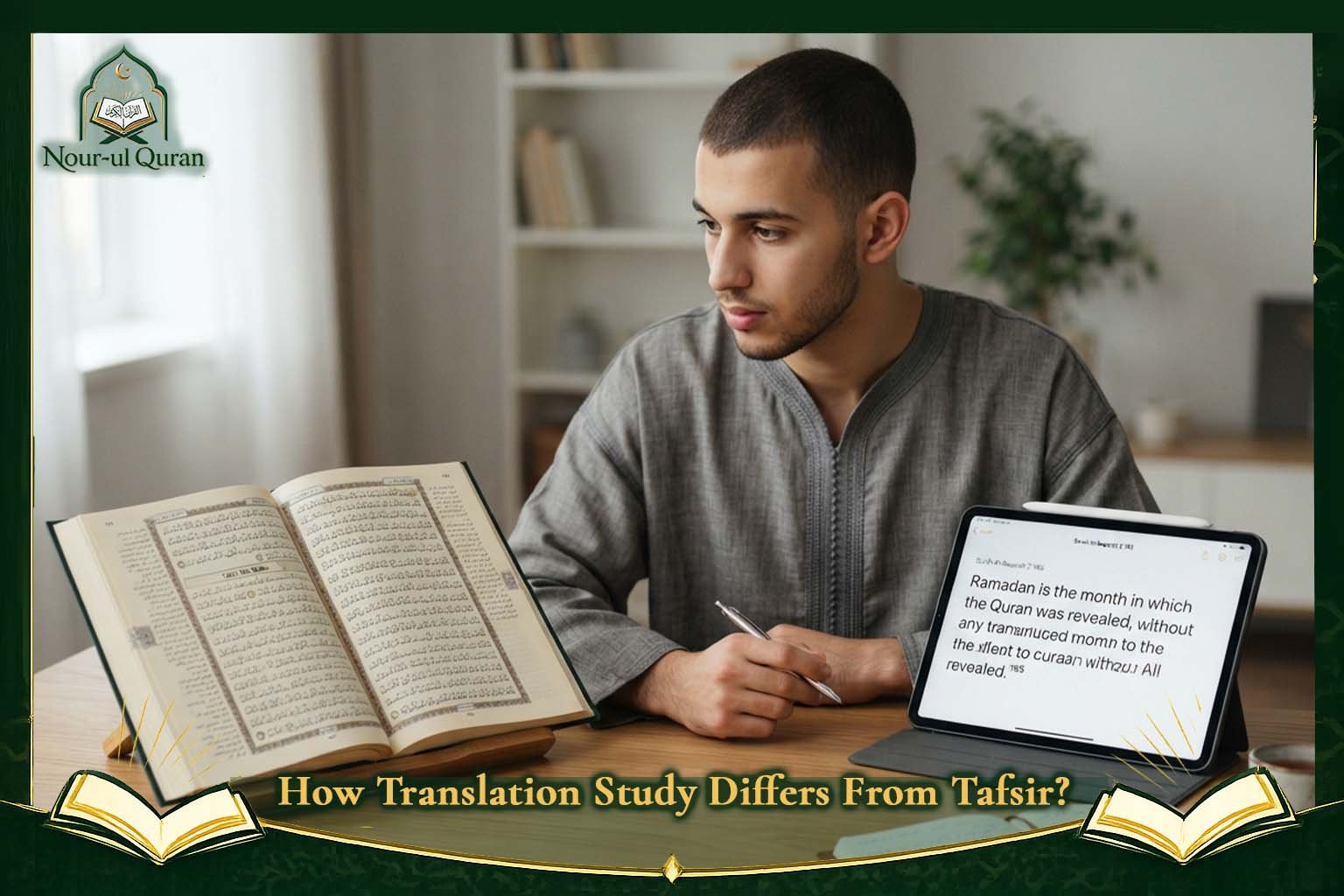
Translation focuses primarily on rendering the literal and contextual meaning of Arabic words into clear English. By contrast, tafsir goes further, drawing on scholarly explanation, historical context, and broader interpretation beyond direct wording.
Consequently, many students start with translation before moving toward deeper tafsir study later on. Therefore, understanding this distinction helps families choose the right starting point for their specific goals.
Explore Quranic Verses with Better Understanding
A deeper understanding of the Quran begins with learning what its verses mean. Through the Quran Translation Course Online at Nour Ul Quran Academy, students can explore Quranic meanings with guidance from experienced tutors.
The course helps learners connect the verses they read and recite with their meanings and messages. Whether you are improving your Islamic knowledge or simply want to understand the Quran better, our online classes provide convenient and structured learning. Join Nour Ul Quran Academy today and discover a more meaningful way to engage with the Quran.
What a Quran Translation Course Online Actually Covers?
Lessons work through the Quran systematically, translating verses while explaining key vocabulary and grammatical structure along the way. Tutors highlight words that carry multiple possible meanings, explaining which translation fits a given context best.
Students build a working vocabulary of frequently recurring Quranic terms over the course of their study. This vocabulary foundation makes future verses noticeably easier to understand independently.
- Systematic, verse-by-verse translation through the Quran
- Explanation of frequently recurring Quranic vocabulary
- Clarification of words carrying multiple possible meanings
- Gradual reduction in reliance on tutor-provided translation
Who Benefits Most From This Course?
-
Reverts and New Muslims: Students newer to Islam often want direct access to meaning without waiting years to develop independent Arabic reading skills. Translation study gives immediate, accurate access to content while broader language study continues separately.
-
Long-Time Reciters Seeking Deeper Connection: Many students who memorized large portions of the Quran years ago never formally studied what those verses mean. Translation study reconnects familiar, memorized verses with genuine understanding for the first time.
How Sessions Are Typically Structured?
A session generally begins with a short recitation of that day's passage, followed by word-by-word translation guidance. Tutors pause on key terms, explaining root meanings and how they shift slightly depending on context.
Students are encouraged to attempt translating simpler phrases independently before the tutor confirms or refines their attempt. This active participation builds genuine translation skill rather than passive listening alone.
Building Independent Translation Skills Over Time
The ultimate goal of this course is reducing a student's dependence on external translation over time. Initially, sessions rely heavily on tutor guidance, but later sessions shift toward student-led attempts with tutor confirmation.
Eventually, many long-term students reach a point where they can follow familiar surahs with minimal outside help. Thus, this growing independence represents genuine, lasting progress rather than simple memorization of translated text.
Common Challenges Students Face
Some students initially struggle with Arabic words that have no single, clean English equivalent. Similarly, others find it difficult to hold multiple possible meanings in mind while continuing to read forward.
In response, tutors address this by returning to challenging terms repeatedly across different lessons, reinforcing understanding gradually rather than all at once. Ultimately, patience with this gradual process produces far better long-term results than expecting instant fluency.
How This Course Complements Ijazah and Recitation Study?
Students often pursue translation study alongside ongoing recitation refinement or ijazah certification work. Understanding meaning while reciting tends to improve focus and emotional connection during recitation itself. Families interested in combining certified recitation training with translation study can also explore our Ijazah certification course alongside this program.
Why Accurate Translation Requires Genuine Expertise?
Casual online translations sometimes oversimplify or miss important contextual nuance found in the original Arabic. Tutors trained specifically in this area draw on established, scholarly translation sources rather than casual paraphrase.
This attention to accuracy matters considerably for students building a genuine, lasting understanding rather than a superficial one. Families can trust that translation offered in this course rests on credible scholarly foundations.
- Tutors draw on established, scholarly translation sources
- Casual oversimplification and paraphrase are deliberately avoided
- Context-dependent word meanings are explained, not glossed over
- Students receive references supporting each translation choice
How to Get Started With Quran Translation Study?
Enrollment begins with a short conversation covering a student's current Arabic familiarity and specific learning goals. From there, a tutor selects an appropriate starting point in the Quran matched to that student. Interested families can explore our Quran translation course online and begin building genuine understanding alongside recitation.
How Progress Is Tracked Over Time?
Tutors periodically ask students to translate a familiar passage independently, checking accuracy against the original meaning. This periodic testing reveals genuine retained understanding rather than temporary familiarity from a single session.
Families receive updates highlighting vocabulary mastered and areas still requiring continued reinforcement. This ongoing feedback keeps progress visible and concrete throughout a student's ongoing study.
Making Translation Study a Long-Term Habit
Students who treat translation study as an ongoing pursuit, rather than a course to complete quickly, see the deepest benefit. A steady weekly pace, even covering a modest amount of text, compounds meaningfully across months and years.
Many long-term students eventually move from translating individual verses toward following extended passages independently. This long view keeps expectations realistic while still producing real, visible progress over time.
Why Nour ul Quran Academy Structures Translation Study This Way?
Nour ul Quran Academy deliberately avoids rushing students through the entire Quran superficially. Instead, tutors prioritize depth over speed, ensuring vocabulary genuinely sticks before moving forward.
Consequently, students build a durable foundation rather than a shallow familiarity that fades quickly after each session. Furthermore, this measured approach means progress compounds steadily, since earlier vocabulary continues reinforcing later, more advanced passages.
How Group Discussion Sometimes Enriches Individual Study?
Although most sessions run one-on-one, some students benefit from occasionally comparing notes with peers studying similar material. Therefore, tutors sometimes suggest optional discussion opportunities alongside regular individual sessions.
Additionally, hearing how another student interpreted a challenging phrase can highlight nuances an individual session might not surface. As a result, students who engage with this optional discussion often report a richer, more layered understanding overall.
Addressing Common Frustrations During Early Sessions
Early on, many students feel frustrated when a single verse takes far longer to translate than expected. However, this slower pace is completely normal and actually reflects careful, accurate work rather than inefficiency.
Moreover, speed naturally increases considerably once foundational vocabulary becomes familiar through repeated exposure. Therefore, students are encouraged to trust the process rather than judging early progress against an unrealistic pace.
How This Course Supports Long-Term Memorization Goals
Many students pursuing memorization find that understanding meaning first makes verses noticeably easier to retain long-term. Therefore, some families deliberately sequence translation study just ahead of memorizing a new portion of the Quran.
Consequently, the memorized text carries genuine meaning from the very first repetition, rather than becoming meaningful only later. This sequencing, while entirely optional, often produces a more emotionally resonant and durable memorization experience overall.
Choosing Between a Full Course and Ongoing Study
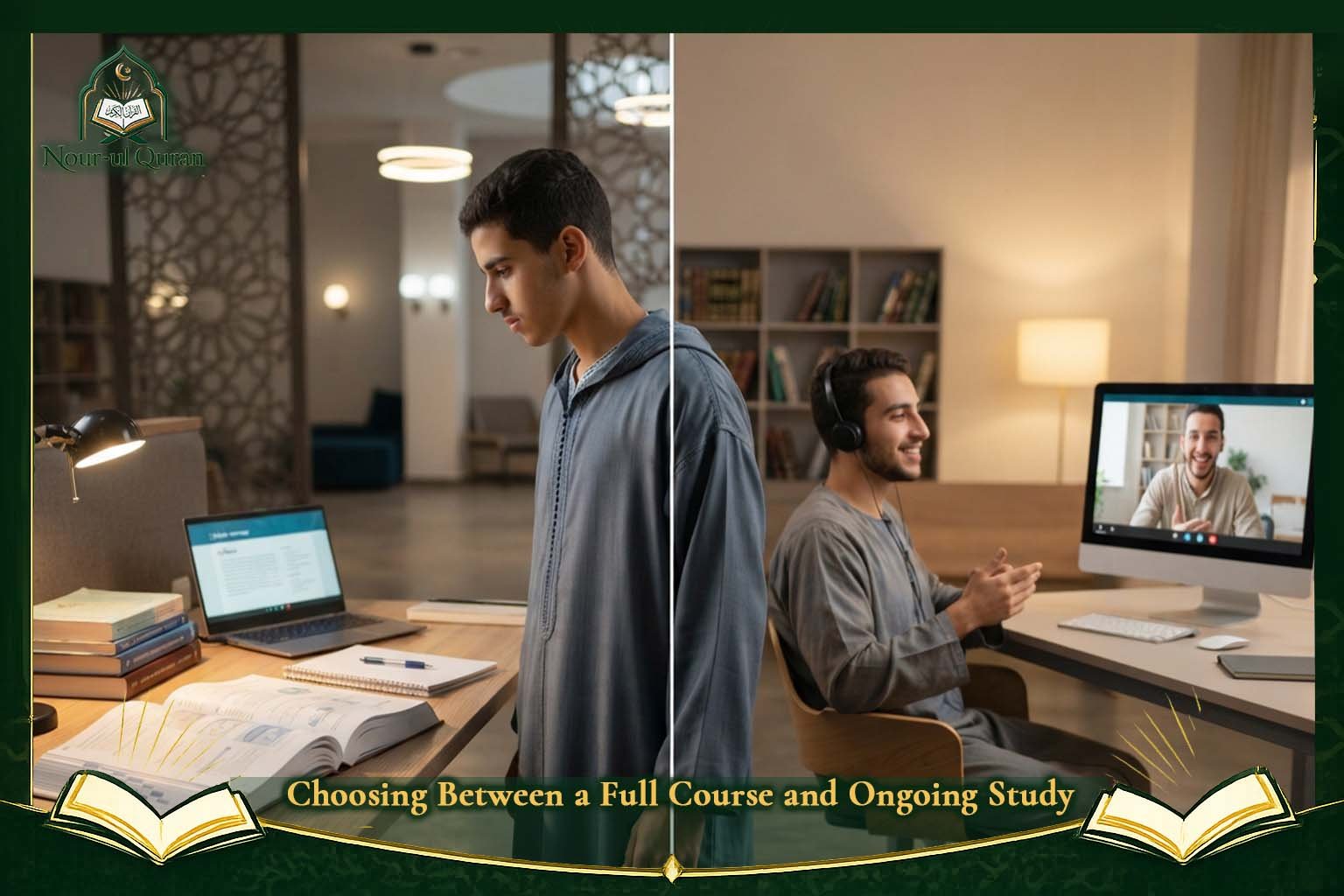
Some students approach translation study as a defined course with a clear starting and ending point. Others prefer treating it as an ongoing, open-ended pursuit alongside their broader Islamic education.
Nour ul Quran Academy accommodates both approaches, structuring sessions around each individual student's actual goals. Either path produces real, lasting benefit, provided the student maintains consistent weekly engagement with the material.
Frequently Asked Questions
The sections above cover course structure, pacing, and how this differs from tafsir study. A few additional questions come up often once students and families consider enrolling. These answers address points not covered earlier.
Do I need any prior Arabic knowledge to start this course?
No, tutors build translation skill from the ground up, explaining Arabic vocabulary and structure as it comes up rather than assuming prior formal Arabic study.
How is this course different from simply reading a translated Quran at home?
A tutor explains context, clarifies ambiguous wording, and answers questions in real time, producing far deeper understanding than reading a static translation alone.
Can children take this course, or is it only for adults?
Older children and teenagers with solid reading skills can benefit, though this course generally suits students mature enough for sustained vocabulary-focused study.
Will I eventually be able to translate without any outside help?
Many long-term students reach meaningful independence with familiar portions of the Quran, though continued guidance remains valuable for less familiar or more complex passages.
Does this course cover the entire Quran, or select portions only?
Coverage depends on how long a student continues, since translation study moves gradually. Many students prioritize frequently recited surahs before expanding further.
How does this course handle differing scholarly translation opinions?
Tutors present the mainstream, well-supported translation for a given verse while noting where genuine scholarly differences exist, rather than presenting only one view as absolute.
In conclusion, a Quran translation course online gives students direct, accurate access to meaning that recitation alone cannot provide. Nour ul Quran Academy builds this skill gradually, moving students from tutor-guided translation toward genuine independence over time.
Reverts, long-time reciters, and students pursuing ijazah certification all benefit from this focused, systematic study. Patience with challenging vocabulary and consistent weekly practice matter far more than rushing toward instant fluency. Beginning this course now moves your relationship with the Quran from recitation toward genuine, lasting comprehension.