
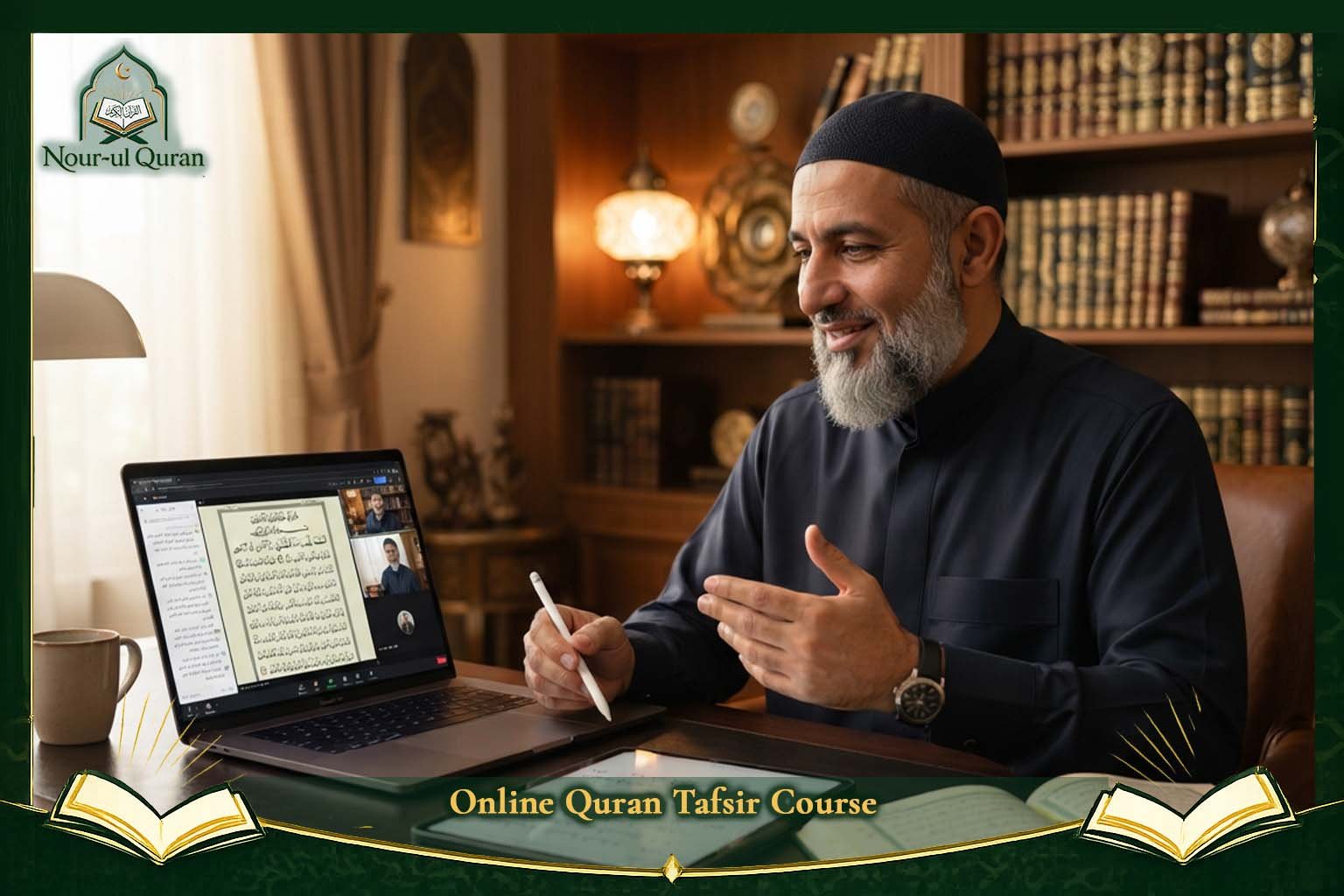
Online Quran Tafsir course options let students move beyond correct recitation into genuine understanding of what each verse actually means. Many students spend years reciting beautifully while the deeper meaning stays just out of reach
Tafsir closes that gap by explaining context, word choice, and the lessons scholars have drawn from each passage. At Nour ul Quran Academy, this course pairs students with tutors trained specifically in classical tafsir sources.
This article explains what the course covers, who benefits most, and how sessions are structured. It also covers pacing, prerequisites, and what a typical lesson actually looks like.
What Tafsir Actually Means and Why It Matters?

Tafsir refers to the scholarly explanation and interpretation of Quranic verses. It draws on the context of revelation, classical Arabic linguistics, and the explanations left by early scholars.
Recitation alone conveys sound and rhythm, but tafsir conveys meaning and application. Without it, many verses remain beautiful but abstract. Students who study tafsir often describe a shift in how they experience prayer and daily recitation, since familiar verses suddenly carry specific, tangible meaning.
Deepen Your Understanding with an Online Quran Tafsir Course
Discover the meanings, lessons, and guidance within the Quran through an engaging Online Quran Tafsir Course at Nour Ul Quran Academy. Our qualified teachers help students understand Quranic verses in a clear and accessible way while connecting their meanings to everyday life.
Whether you are beginning your journey with Tafsir or looking to deepen your existing knowledge, our online classes provide personalized guidance from the comfort of your home. Join Nour Ul Quran Academy today and take a meaningful step toward understanding the Quran beyond recitation. Enroll now and begin your Tafsir journey with dedicated Quran teachers.

Who Should Enroll in an Online Quran Tafsir Course?
This course suits students who already read the Quran reasonably well and want to deepen their understanding. Teenagers and adults tend to benefit most, since the material involves sustained discussion and reflection.
Reverts building foundational knowledge from scratch also gain enormously from structured tafsir study. Some students enroll after years of memorization, realizing they want to understand meaning behind verses they already know by heart.
- Students who recite comfortably but want deeper meaning
- Adults and older teenagers ready for sustained discussion
- Reverts building religious knowledge from a solid foundation
- Memorization students seeking meaning behind familiar verses
Core Topics Covered in the Curriculum
The curriculum covers essential topics through structured lessons, practical exercises, and expert guidance, helping students develop strong knowledge and confidence.
Classical Tafsir Sources
Lessons draw primarily on well-established classical tafsir works, translated and explained in accessible language. Tutors reference these sources directly rather than relying on personal opinion or modern commentary alone.
This grounding gives students confidence that explanations rest on established scholarship rather than casual interpretation.
Thematic and Contextual Study
Beyond verse-by-verse explanation, lessons connect related themes across different surahs. Understanding the historical context behind a revelation often clarifies why a particular ruling or story appears where it does.
This thematic approach helps students see the Quran as a coherent whole rather than a collection of isolated verses.
How a Typical Tafsir Session Is Structured?
Sessions generally begin with a short recitation of the passage under study that day. The tutor then walks through key vocabulary, historical context, and scholarly explanation for that passage.
Students are encouraged to ask questions throughout rather than waiting until the end. A session usually closes with a brief discussion connecting the passage to everyday life or current circumstances.
Prerequisites for the Online Quran Tafsir Course
Solid recitation ability is generally expected before starting this course, since tafsir sessions assume comfortable reading. Prior Arabic study is helpful but not required, since tutors explain terms in English throughout.
Younger students sometimes benefit from completing a foundational Islamic studies course first, though this is not a strict requirement for older, more mature students.
How This Course Complements Quran Memorization?
Many students pursue tafsir alongside ongoing memorization work rather than treating the two as separate tracks. Understanding a verse's meaning while memorizing it noticeably improves long-term retention for many students.
Tutors often draw explicit connections between a student's current memorization portion and its tafsir explanation, reinforcing both simultaneously.
Balancing Depth With an Accessible Pace
Tafsir study can feel overwhelming if it moves too quickly through dense material. Tutors deliberately pace sessions to match each student's comprehension level, rather than rushing through a fixed syllabus. This means two students studying the same surah might progress through it at meaningfully different speeds depending on their background and confidence.
- Pacing adjusts based on individual comprehension, not a fixed calendar
- Younger and older students often work through material differently
- Complex passages receive extra time before moving forward
- Regular review keeps earlier lessons from fading between sessions
How Tutors Bring Historical Context to Life?
Understanding when and why a verse was revealed often unlocks its meaning more than translation alone. Tutors describe the circumstances surrounding revelation using accessible storytelling rather than dry historical summary.
This approach makes abstract historical events feel relevant and concrete for students studying online from home. Connecting a verse's origin story to its practical lesson tends to make that lesson considerably more memorable.
Common Questions Students Ask Early in the Course
New students frequently wonder whether they need years of prior study before starting tafsir. In most cases, comfortable recitation and genuine curiosity are the real requirements, not advanced scholarly background.
Others ask whether different scholarly interpretations will be discussed. Tutors do address areas of scholarly difference where relevant, presenting mainstream positions clearly rather than avoiding the topic.
Why Choose Nour ul Quran Academy for Tafsir Study?
Nour ul Quran Academy pairs tafsir students with tutors trained specifically in this subject, not general reciters asked to teach it. Sessions run one-on-one, allowing genuine discussion rather than a lecture format.
This individualized approach lets a tutor adjust explanations to match exactly what a student already understands. Ready to begin? Explore our online Quran Tafsir course and start building real understanding alongside your recitation.
What Students Often Notice After a Few Months?
Students frequently report that familiar surahs feel entirely different once they understand the meaning behind them. Prayer often becomes more reflective, since verses recited daily now carry specific, understood content.
Many students also find themselves naturally sharing tafsir insights with family members, extending the benefit well beyond their own individual study sessions.
Keeping Momentum Between Sessions
Consistent weekly sessions matter more for tafsir than occasional intensive study, since concepts build progressively on each other. Reviewing brief personal notes from the previous session before each new one helps maintain continuity.
Students who keep even a simple notebook of key points tend to retain material more effectively over several months of study.
Tools and Materials Used During Tafsir Sessions
Sessions typically rely on a shared digital text alongside a translated tafsir reference, viewed together over video call. Tutors sometimes share short written notes after a session summarizing key points covered that day.
These notes give students something concrete to review before the following week's lesson. Families new to online learning generally find this setup straightforward, since it requires no special software beyond a stable video connection.
How Progress Is Measured in a Tafsir Course?
Unlike memorization, where progress is easy to count in verses, tafsir progress is measured differently. Tutors assess understanding through discussion, asking students to explain a verse's meaning in their own words rather than repeat a definition.
This approach reveals genuine comprehension rather than surface-level familiarity with terminology. Periodic review sessions revisit earlier surahs, reinforcing material that might otherwise fade between weekly lessons.
Making Tafsir Study Part of a Long-Term Routine
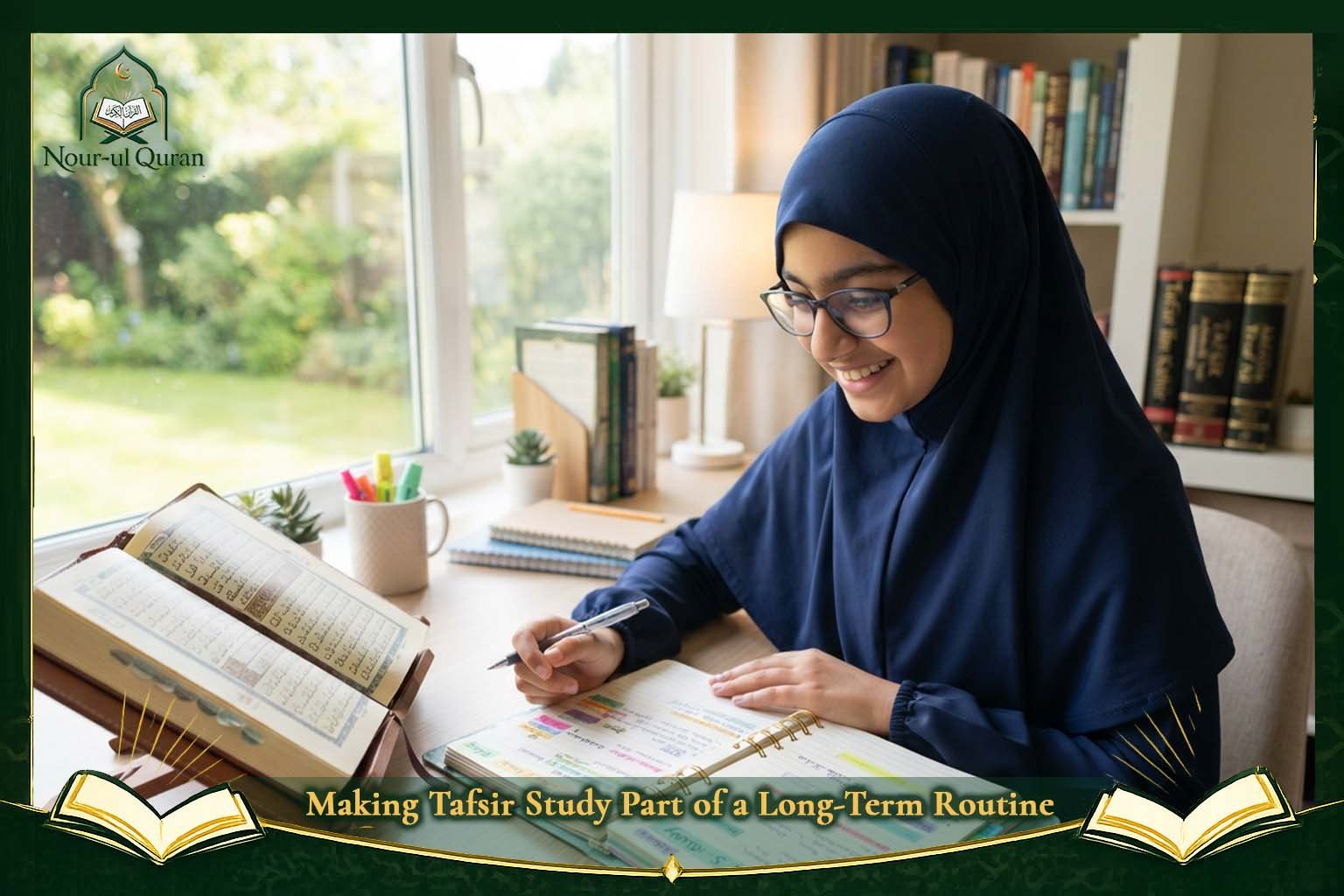
Families who treat tafsir as a permanent part of religious education, rather than a short course to finish quickly, tend to see the deepest benefit. A steady weekly rhythm, even at a modest pace, compounds meaningfully over several years of consistent study.
Many long-term students eventually move from studying individual verses toward tracing broader themes across the entire Quran. This long view keeps expectations realistic while still producing real, visible progress year after year.
Frequently Asked Questions
The sections above cover curriculum content, structure, and prerequisites in detail. A few additional questions come up often once families and adult students consider enrolling. These answers address points not covered earlier.
How long does it take to complete a full tafsir course?
There is no fixed completion timeline, since tafsir study is generally treated as an ongoing pursuit rather than a course with a strict finish line, though many students complete a meaningful portion within one to two years.
Can children enroll in the Online Quran Tafsir Course?
Older children who already recite comfortably and show genuine interest can enroll, though tutors generally recommend this course primarily for teenagers and adults capable of sustained discussion and reflection.
Do I need to know Arabic grammar before starting?
No, prior Arabic grammar study is helpful but not required, since tutors explain relevant vocabulary and grammatical points in English as they come up within each lesson.
Will the course cover the entire Quran eventually?
Coverage depends on pacing and how long a student continues, since tafsir study moves more slowly than recitation. Many students focus on frequently recited surahs first before expanding further.
How is this course different from a general Islamic studies class?
Islamic studies covers broader topics like belief, worship, and history, while tafsir focuses specifically and deeply on Quranic verse explanation, often assuming some existing Islamic studies foundation already exists.
Can I switch tutors if the current pace does not suit me?
Yes, families can request a different tutor if the current pairing does not feel like the right fit, since matching pace and teaching style matters considerably for sustained tafsir study.
In conclusion, an online Quran Tafsir course gives students the missing piece that recitation alone cannot provide: genuine understanding of meaning.
Nour ul Quran Academy structures this course around classical scholarship, individualized pacing, and one-on-one discussion. Students who already recite comfortably, whether teenagers, adults, or reverts, tend to benefit most from this deeper study.
Pairing tafsir with ongoing memorization reinforces both skills at once, rather than treating them as unrelated tracks. Starting this course now moves your relationship with the Quran from recitation toward genuine, lasting understanding.