
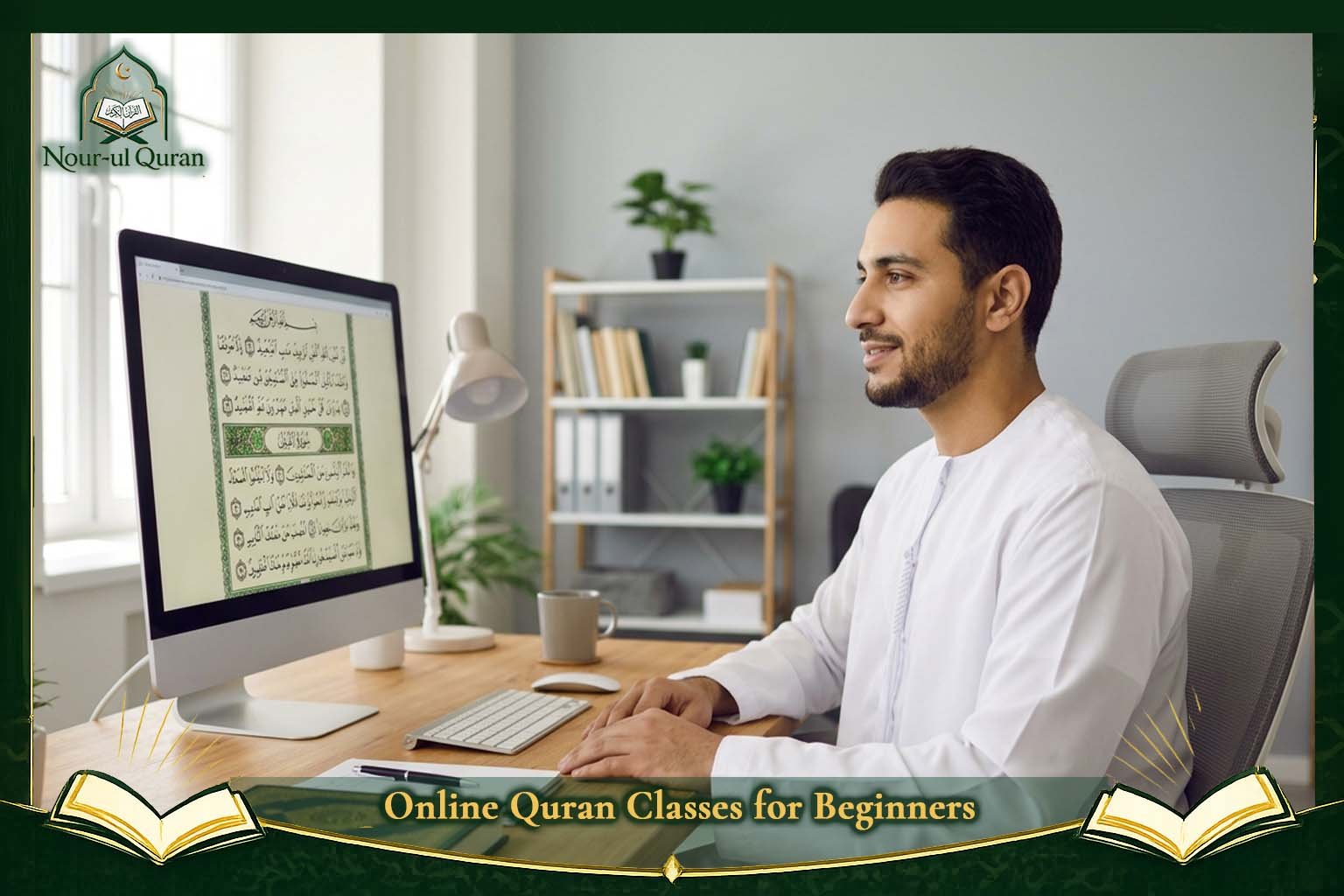
Online Quran Classes for Beginners: How to Actually Get Started
Starting something completely new as an adult, or watching your child start it, always comes with a bit of hesitation. Where do you even begin. What if you can't read the letters at all. What if you've tried before and it didn't really go anywhere. These are the exact questions that come up over and over with people looking into online Quran classes for beginners, whether it's for themselves, their child, or both.
Here's the reassuring part. Beginner really does mean beginner in a good program. You're not expected to already know anything. Not the alphabet, not basic pronunciation, nothing. A properly structured beginner course starts from true zero and builds up methodically, at a pace that actually matches where you are, not some assumed starting point that leaves you lost in week one.
This guide walks through exactly what beginner-level Quran classes look like, what a realistic first few months feel like, common worries people have before starting, and how to choose a program that won't leave you feeling behind before you've even really begun.
What "Beginner" Actually Means in Quran Learning?
A lot of people assume being a total beginner is somehow embarrassing, especially adults who feel like they "should" already know this. It's worth saying clearly: there is nothing unusual about starting from zero, at any age. Plenty of adult reverts, people raised without much religious education, and busy parents finally making time for themselves all start in exactly the same place.
In practical terms, a true beginner in Quran learning typically falls into one of a few starting points. Some people don't recognize the Arabic alphabet at all. Others recognize some letters but struggle connecting them into words. Some can read slowly but make consistent pronunciation mistakes because no one ever corrected them properly. And some have memorized a few short chapters through repetition without actually being able to read the Arabic script itself.
A good beginner program figures out exactly which of these describes you (or your child) in the very first session, and builds a path from there, rather than assuming everyone starting a "beginner" course is at the exact same point.
Begin Your Quran Journey with Confidence
If you are new to Quran learning, Online Quran Classes for Beginners at Nour Ul Quran Academy can provide the structured support you need. Our qualified teachers introduce students to Quran reading, pronunciation, recitation, and essential foundational skills in a simple step-by-step manner.
Personalized online lessons allow you to learn at a comfortable pace without leaving home. Whether you are an adult or a young learner, our classes can help you develop confidence from the very beginning. Start your Quran learning journey today and enroll with Nour Ul Quran Academy.

What a Proper Beginner Curriculum Looks Like?
The foundation of almost every solid beginner Quran program is something called the Noorani Qaida. It's a small booklet, but it carries an enormous amount of structure, and it's been used for generations to teach correct Arabic reading and basic Tajweed rules from the very first lesson.
Letter recognition and pronunciation. This is genuinely step one. Learning each Arabic letter, its shape in different positions within a word, and crucially, how to pronounce it correctly. A lot of the letters in Arabic have sounds that don't exist in English or most other languages, so this stage takes real, patient practice, and a good tutor spends as much time here as actually needed rather than rushing forward.
Basic Tajweed rules from the start. Rather than treating correct pronunciation as an advanced topic to tackle later, good beginner programs introduce foundational Tajweed rules early, things like the difference between similar sounding letters, basic rules of elongation, and proper articulation points. Building these habits correctly from the beginning is much easier than trying to fix incorrect habits later.
Connecting letters into words. Once individual letters are solid, the next stage focuses on how letters change shape and connect within words, since Arabic script functions quite differently from English in this regard. This stage is where a lot of the real reading skill starts to click into place.
Simple word and short phrase reading. From there, students move into reading short words and simple phrases, still within the structured Qaida framework, building fluency gradually rather than jumping straight into full Quran verses.
First actual Quran reading, usually starting with shorter chapters. Once the fundamentals are solid, students transition into reading directly from the Quran itself, typically starting with the shorter chapters near the end of the Quran, which are more manageable for a true beginner both in length and vocabulary.
This entire process takes real time, and that's completely normal. Depending on age, consistency, and how many sessions per week, working through this foundational stage properly often takes anywhere from a few months to closer to a year. Rushing through it to "get to the real Quran faster" tends to backfire, since shaky fundamentals cause problems down the line that take far longer to fix than they would have taken to build correctly the first time.
Beginners Learning as Adults vs Beginners Learning as Kids
It's worth addressing this directly, since a lot of adult beginners specifically worry that starting later somehow makes it harder or more awkward.
Adult beginners actually bring some real advantages. Better focus and attention span than a young child, the ability to understand explanations more abstractly rather than needing everything turned into a story, and generally stronger self discipline around practicing consistently between sessions. What adult beginners sometimes lack is the flexibility kids have in adapting to new sounds, since younger children's ears are often naturally more adaptable to unfamiliar phonetics. This isn't a huge obstacle though, just something a patient tutor accounts for with a bit more repetition where needed.
Child beginners, on the other hand, typically need shorter, more varied sessions to hold their attention, more storytelling and encouragement built into lessons, and a slower overall pace with more repetition, since young children generally need to encounter something several times before it truly sticks.
Either way, the core curriculum and structure remains largely the same. What changes is pacing, teaching style, and how much encouragement and variety gets built into each session.
How Online Classes Actually Work for True Beginners?
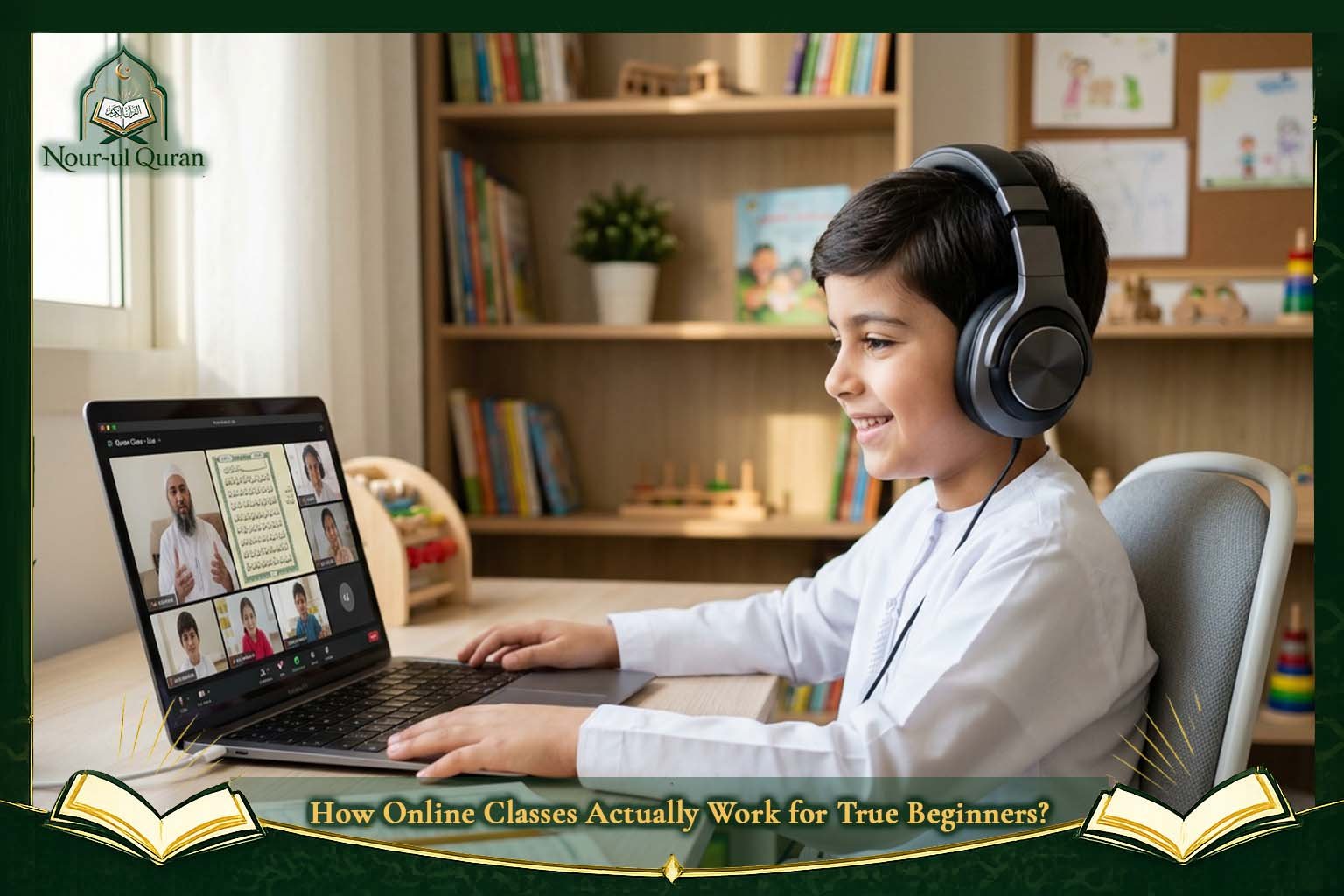
A common worry among total beginners, especially adults, is whether online classes can really teach something as foundational as basic letter recognition and pronunciation effectively over a screen. In practice, it works well, largely because of how one on one live instruction functions.
Real Time Correction, Just Like In Person
A live video call allows a tutor to hear your pronunciation directly and correct it immediately, the same way they would sitting next to you. Screen sharing also lets tutors point directly at specific letters or words while explaining, which replicates the experience of sitting together with a physical book quite closely.
No Pressure From Being Around More Advanced Students
One on one beginner classes remove any comparison with other students entirely. There's no sense of being "behind" a group, no self consciousness about making the same mistake five times in a row. It's just you, or your child, and a patient tutor working at exactly the right pace.
Consistent Scheduling That Actually Fits Beginner Pacing
Beginner learning benefits enormously from frequent, shorter sessions rather than occasional long ones, since foundational skills like letter recognition rely heavily on repetition. Online scheduling flexibility, with classes available across time zones seven days a week, makes it realistic to fit in two or three shorter weekly sessions rather than trying to find one long weekly slot that fits around a busy calendar.
Patient, Specifically Trained Beginner Tutors
Not every tutor is equally suited to teaching absolute beginners. Working with someone who has zero prior knowledge requires a specific kind of patience and a slower, more foundational teaching style than working with an intermediate student. Look for academies that specifically mention experience teaching complete beginners, rather than assuming any qualified tutor automatically handles this stage equally well.
What to Expect in Your First Few Sessions?
The very first session usually starts with a simple, honest assessment. A good tutor will ask you to try reading a few letters or a short passage if you have any prior exposure at all, just to understand your actual starting point rather than guessing.
If you or your child are truly starting from zero, the first several sessions typically focus entirely on the Arabic alphabet, one small group of letters at a time, with plenty of repetition and practice built in before moving forward. This might feel slow at first, especially if you were hoping to jump into reading verses quickly, but this foundation genuinely determines how smoothly everything after it goes.
Homework in these early weeks is usually light and specific, often just reviewing a small handful of letters or sounds daily for five to ten minutes, rather than anything overwhelming. Consistency matters far more than volume at this stage.
By around the one to two month mark, most beginners start recognizing a meaningful chunk of the alphabet and can start connecting simple letters into basic reading. This is genuinely exciting progress, even if it still feels far from reading full Quran verses. Real Quran reading with reasonable fluency for someone practicing a few times a week consistently often starts to feel achievable somewhere in the six month to one year range, though this varies quite a bit from person to person.
Common Worries Beginners Have (and Why They're Normal)
99.jpg)
"I'm too old to start this." This comes up constantly among adult beginners, and it's simply not true. People successfully learn to read Quran starting in their thirties, forties, fifties, and beyond. The skills involved, letter recognition and pronunciation, are entirely learnable at any age with patient, consistent practice.
"My child is too young to focus on something this detailed." Most academies start working with children from around age four, with sessions specifically shortened and adapted for that age group. Young children are actually quite capable of picking up letter recognition when it's taught in a way suited to their attention span.
"I tried before and gave up, so maybe this isn't for me." A lot of people who "gave up" previously simply weren't working with a properly structured beginner curriculum, or were rushed through fundamentals too quickly. A patient, well structured program often succeeds where a previous less structured attempt didn't.
"What if I make the same mistake over and over?" This is completely normal in the early stages and exactly what a patient tutor expects and plans for. Repetition and repeated correction are simply part of how this foundational stage works for almost everyone.
Tips for Making Real Progress as a Beginner
Practice in short, frequent bursts rather than occasional long sessions. Ten focused minutes daily beats one hour once a week for building foundational reading skills.
Don't rush past the alphabet stage even if it feels slow. A solid foundation here genuinely makes everything after it faster and smoother, while rushing tends to create pronunciation habits that are much harder to correct later.
Review out loud, not just silently. Reading Arabic silently in your head doesn't build the same pronunciation skill as reading it aloud, even when practicing alone between sessions.
Be patient with mistakes, your own or your child's. This stage genuinely involves a lot of repeated correction, and treating that as a normal, expected part of the process rather than a frustration keeps motivation intact far better.
Track small wins. Recognizing a new letter, connecting your first two-letter word, reading your first short verse. These small milestones matter and are worth acknowledging, especially early on when the bigger goal can feel far away.
Why do beginners choose Nour-ul Quran Academy?
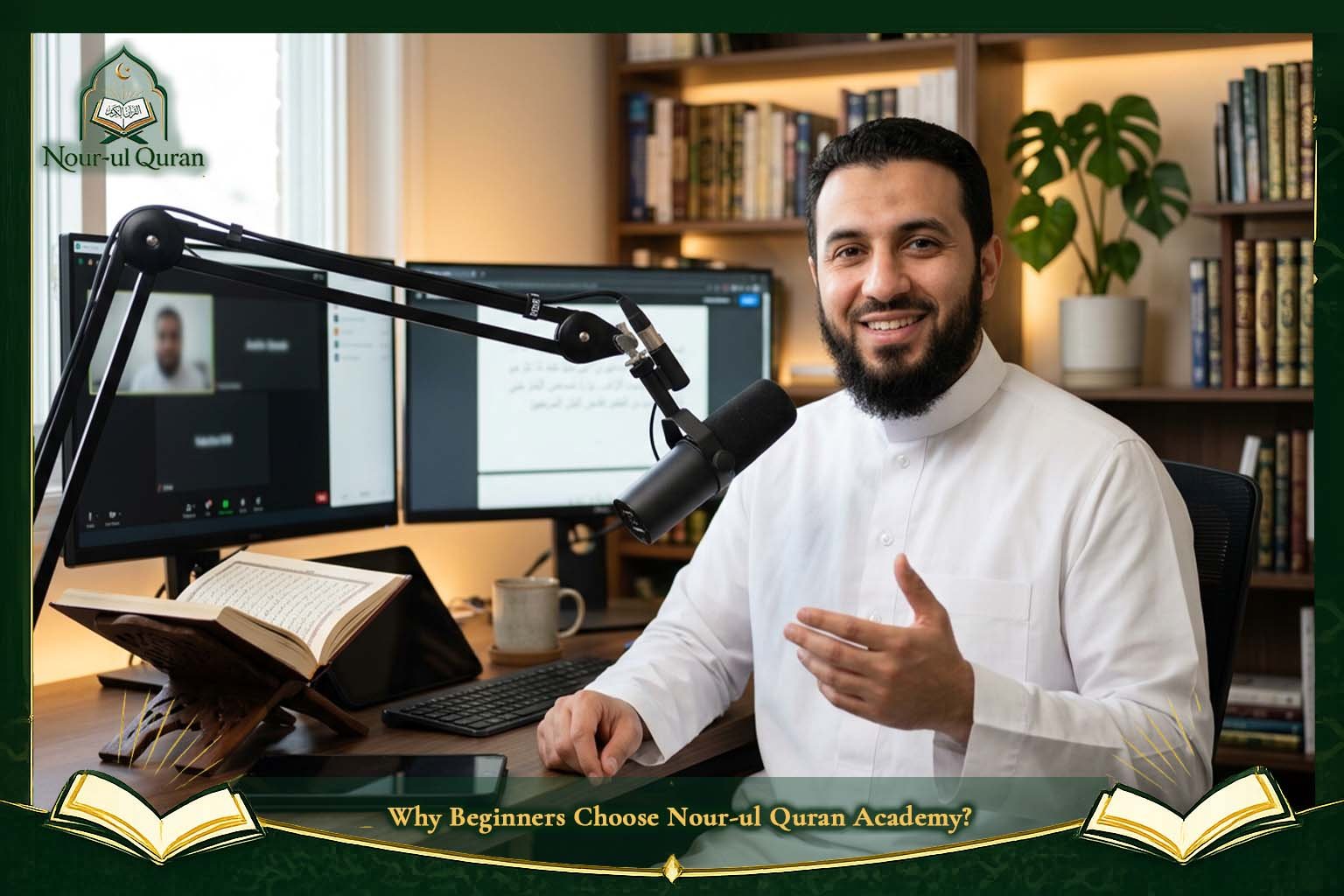
At Nour-ul Quran Academy, our beginner Quran program is built specifically around the idea that starting from true zero is completely normal, whether that's a four year old just learning their first letter or an adult finally making time for something they've wanted to learn for years.
Our tutors are Al Azhar-trained and specifically experienced working with absolute beginners, meaning lessons move at a genuinely patient pace rather than assuming any prior knowledge. Every class is live and one on one over Zoom, so correction happens in real time, and there's no pressure of comparing yourself to other students at a different stage.
We run classes seven days a week across all time zones, making it realistic to schedule the frequent, shorter sessions that actually work best for beginner learning. And we send regular progress updates, so whether you're tracking your own learning or your child's, you always know exactly where things stand.
Whether you're picking up the Arabic alphabet for the very first time or slowly working your way toward reading full Quran verses with proper Tajweed, our beginner program is structured to meet you exactly where you are.
Frequently Asked Questions
Do I need any prior knowledge to start beginner Quran classes? No. Beginner classes are built specifically for people with zero prior exposure, starting from basic Arabic letter recognition.
How long does it typically take to go from beginner to reading Quran fluently? This varies quite a bit depending on age, consistency, and sessions per week, but many students working consistently a few times weekly start reading full verses with reasonable fluency somewhere between six months and a year.
Is it harder to learn as an adult beginner compared to a child? Not necessarily harder, just different. Adults often progress faster in some areas due to stronger focus and self discipline, while children sometimes pick up unfamiliar sounds more naturally. Both groups make real progress with a properly structured program.
How many sessions per week are recommended for beginners? Two to three shorter sessions weekly tends to work better for building foundational skills than one longer weekly session, since repetition and frequency matter a lot at this stage.
What if progress feels slow at first? This is completely normal for the foundational alphabet and pronunciation stage. Progress usually feels gradual at first before picking up noticeably once the fundamentals are solid.
Final Thoughts
Starting online Quran classes for beginners doesn't require any prior knowledge, any particular age, or any past experience beyond a willingness to start. What actually matters is finding a program built specifically for true beginners, with patient, qualified tutors and a structure that builds real fundamentals rather than rushing toward advanced material too quickly.
Whether it's you or your child taking this first step, the hardest part is usually just starting. The learning itself, taken one small, consistent session at a time, tends to be far more manageable than it feels before you begin.
If you'd like to see what a true beginner class actually looks like, Nour-ul Quran Academy offers a trial session so you can experience a real lesson firsthand before committing to anything further.
Online Quran Classes for Teenagers
Teenagers often need a different approach than younger children or adults just starting out. They usually already have some reading ability, a busier schedule between school and other activities, and want lessons that respect their independence rather than feeling babyish. Our one-on-one online classes work well for teens because the pace, tone, and content are all adjusted specifically for their age and level, not borrowed from a younger kids' curriculum or a generic adult course.
Whether your teenager is a true beginner, restarting after a break, or ready to move into Tajweed, Hifz, or Islamic Studies, we match them with a teacher experienced in working with this age group, someone who can hold their attention, answer their questions directly, and build a realistic weekly schedule around school and other commitments.