
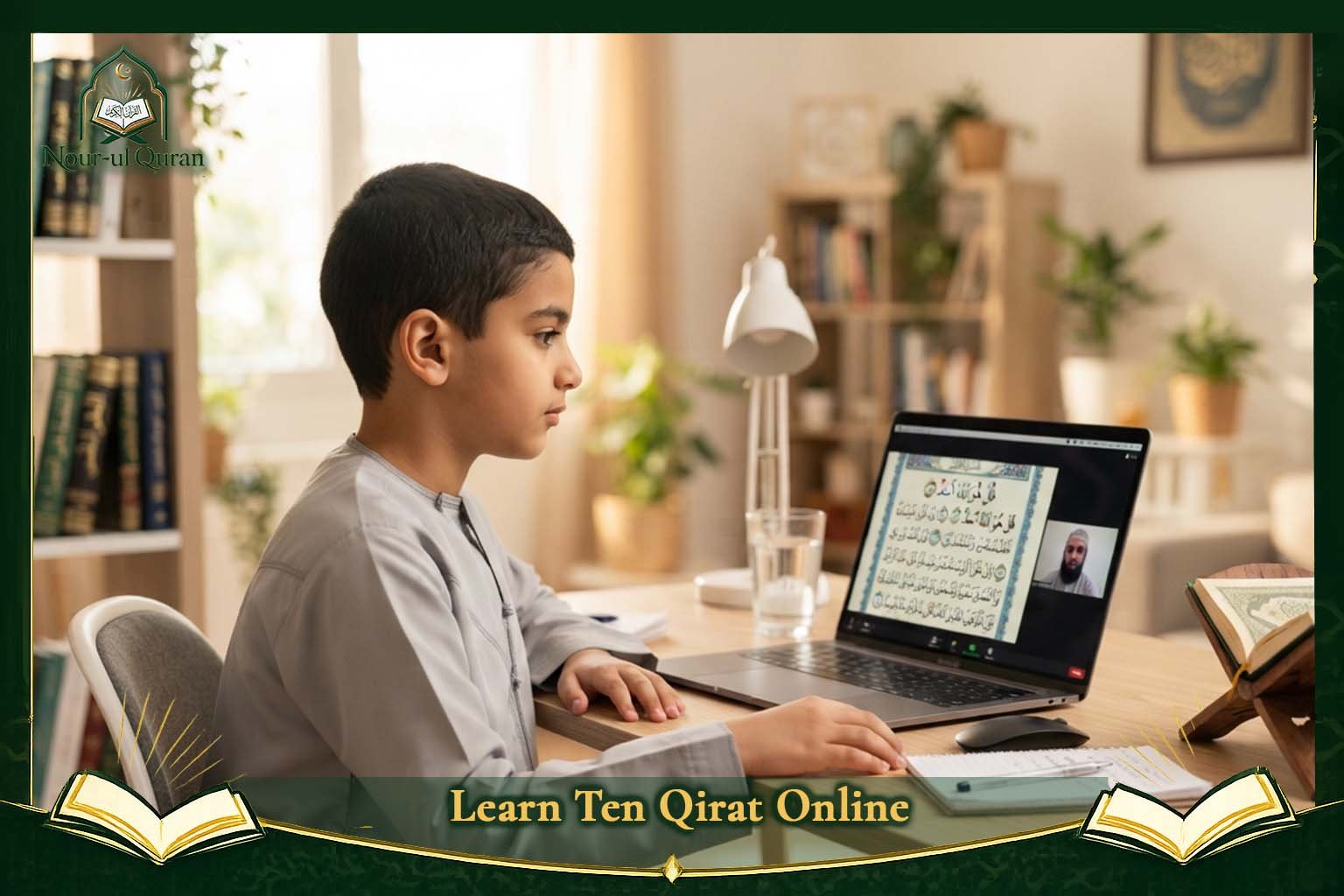
Learn ten qirat online has become a realistic goal for serious students. It is no longer reserved for scholars living near major Islamic institutions. The ten qirat represent the authentic, transmitted ways of reciting the Quran. Each carries subtle but meaningful differences in pronunciation and pause.
At Nour ul Quran Academy, students study these variant readings with tutors trained specifically in this specialized field. This article explains what the ten qirat actually are. It covers who should study them, and how an online course makes this advanced subject genuinely accessible. It also covers realistic timelines and common misconceptions along the way.
What Are the Ten Qirat and Why They Exist?
The ten qirat, or accepted recitation methods, trace back through unbroken chains of transmission. These chains reach all the way to the Prophet Muhammad, peace be upon him. Each qira'ah reflects a slightly different way certain words were pronounced or paused among early reciters.
These are not casual variations invented later; they represent authentic, scholar-verified traditions preserved for centuries. Understanding this history helps students appreciate why studying qirat is treated as a serious, specialized branch of Quranic sciences.
Start Your Journey to Learn Ten Qirat Online
Ready to deepen your Quran recitation and explore the beautiful Ten Qirat? Learn Ten Qirat Online with Nour ul Quran Academy through personalized, live one-on-one classes guided by qualified Al-Azhar tutors. Our flexible online lessons are designed to help students understand the different Qiraat, improve their recitation, and progress confidently at their own pace.
Whether you are continuing your Quranic studies or seeking to expand your knowledge of authentic recitation traditions, our experienced teachers provide structured guidance and individual attention. Book your free trial class today and take the next step toward mastering the Ten Qirat from the comfort of your home.

Who Should Consider Studying Multiple Qirat?
This subject generally suits students who already recite confidently using one standard reading, most often Hafs from Asim. Advanced students, aspiring teachers, and those pursuing an ijazah in recitation benefit most from this deeper study.
It is not typically recommended as a starting point for complete beginners, since a solid foundation in one qira'ah comes first. Some adult students pursue qirat study out of genuine scholarly curiosity rather than a specific certification goal.
- Students with a confident foundation in one standard qira'ah
- Aspiring Quran teachers seeking specialized qualifications
- Ijazah candidates deepening their recitation credentials
- Adults pursuing scholarly depth beyond standard recitation
How Online Study Makes This Advanced Subject Accessible?
Online study makes advanced subjects accessible by offering flexible lessons, expert guidance, interactive resources, and personalized learning from anywhere.
Access to Specialized Tutors
Qualified qirat instructors are genuinely rare, and few students live near one in person. Online study removes this geographic barrier entirely, connecting students anywhere with tutors who specialize specifically in this field.
Flexible, Focused Session Structure
Because qirat study demands close listening and correction, sessions work best in a focused one-on-one format. Online delivery naturally supports this structure without requiring travel or rigid in-person scheduling.
What a Typical Qirat Course Actually Covers?
Coursework typically begins with a review of the student's existing reading to confirm a stable foundation. From there, tutors introduce one additional qira'ah at a time, comparing it directly against the student's familiar reading.
Students practice specific verses where variations appear most clearly, since abstract explanation alone rarely produces lasting mastery. Over time, additional readings get introduced only once earlier ones feel genuinely secure.
Common Misconceptions About the Ten Qirat
Some assume the different qirat represent contradictions or errors in the Quran's preservation, which is simply inaccurate. Each qira'ah rests on an authenticated chain of transmission, not personal preference or regional dialect alone.
Others assume this subject is only for scholars destined for formal teaching positions. In reality, any sufficiently advanced student with genuine interest can pursue this study for personal enrichment.
Realistic Timelines for Qirat Study
Mastering even one additional qira'ah, beyond a student's original reading, typically takes many months of consistent, focused practice. Completing all ten authentically demands years of sustained study, generally alongside a broader program of ijazah certification.
Students should approach this subject with patience, since meaningful progress happens gradually rather than in dramatic leaps.
- Expect months, not weeks, to secure a single additional qira'ah
- Full mastery of all ten typically spans several years of study
- Consistent weekly practice matters more than occasional intensive sessions
- Progress compounds gradually rather than arriving in sudden leaps
How Tutors Structure Correction During Qirat Sessions?
Correction in qirat study requires exceptionally close listening, since differences between readings can be subtle. Tutors often isolate a single word or phrase, demonstrating both readings back to back for direct comparison.
Students then repeat each version separately before attempting to switch between them within the same passage. This deliberate, slow approach prevents the two readings from blending together confusingly in a student's memory.
The Role of Written Notation in Learning Multiple Qirat
Specialized notation marks help students track exactly where a variation occurs within a given verse. Tutors typically provide these annotated texts directly, rather than expecting students to source them independently.
Reviewing this notation alongside audio practice reinforces both the visual and auditory memory needed for lasting retention.
How This Connects to Ijazah Certification?
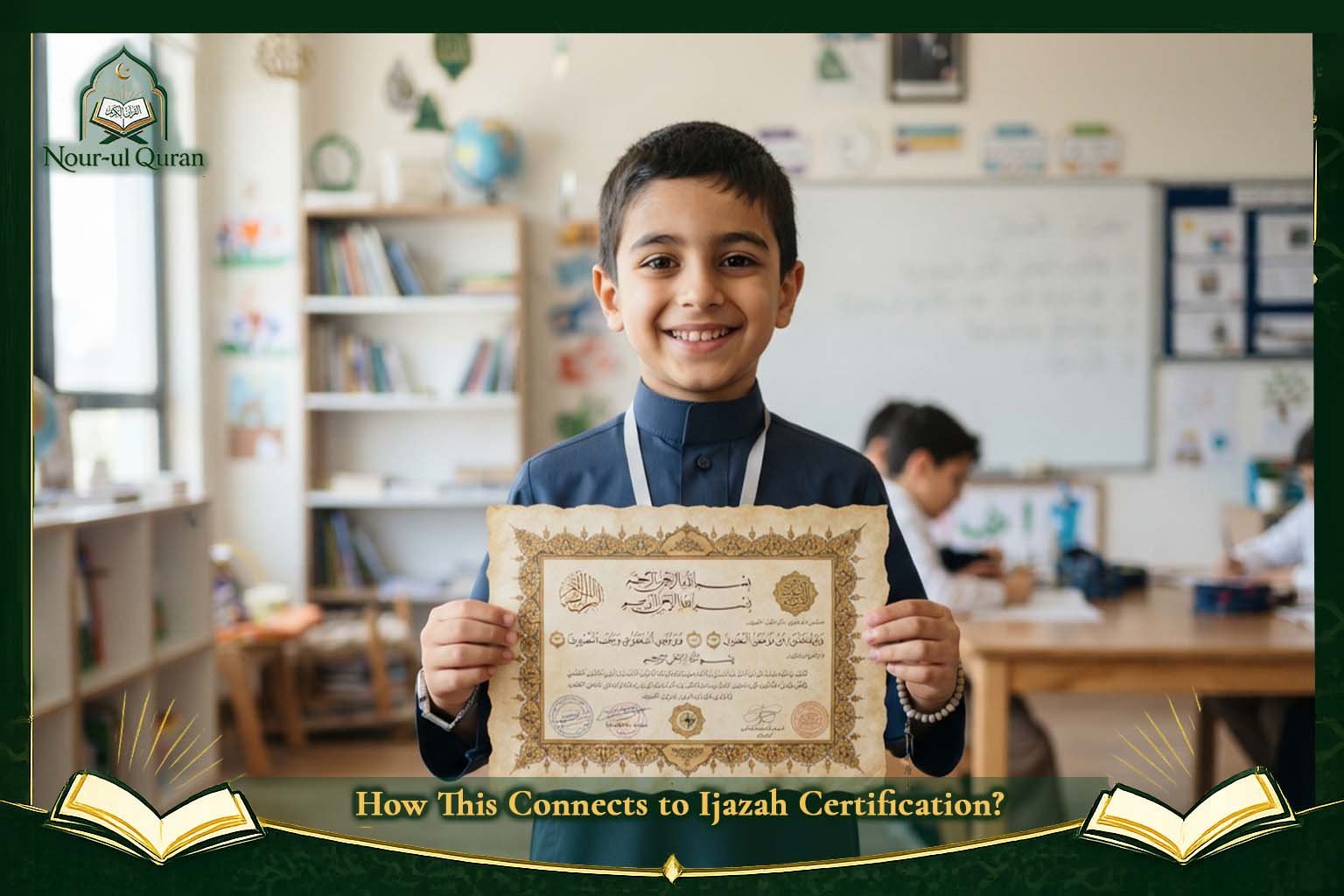
Many students studying multiple qirat are working toward a formal ijazah, a certification confirming mastery through an authenticated teaching chain.
Qirat study often represents one meaningful component within this broader certification pathway, rather than a separate, unrelated pursuit. Students interested in formal certification alongside qirat study can also explore our Ijazah certification course for a complete picture of this pathway.
Avoiding Confusion Between Similar Readings
Certain qirat share more similarities with each other than others, which can create confusion for students studying several at once.
Tutors deliberately sequence which readings get introduced together, often separating closely related ones until each feels independently secure. This sequencing decision draws on a tutor's experience with common student confusion points across many previous students.
How Nour ul Quran Academy Supports Qirat Students?
Nour ul Quran Academy connects students specifically with tutors experienced in multiple qirat instruction, not general reciters asked to teach an unfamiliar subject.
Sessions move at a pace matched to each individual student's existing foundation and available practice time. Ready to explore this specialized study? Our Ten Qirat course connects you directly with a tutor experienced in this field.
Building Confidence Before Switching Between Readings
Confidently switching between two qirat within the same sitting takes considerable practice beyond simply knowing each one individually. Many students initially default back to their original, more familiar reading under pressure. Deliberate practice specifically targeting this switching skill, rather than only practicing each reading in isolation, accelerates genuine confidence considerably.
Choosing a Tutor With Genuine Qirat Expertise
Not every experienced Quran teacher has training in multiple qirat, since this represents a distinct specialization beyond standard recitation instruction.
Families and adult students should specifically confirm a tutor's background in this area before enrolling. A tutor genuinely qualified in this field can typically explain the transmission chain behind each reading clearly and confidently. This transparency itself often signals genuine expertise rather than surface-level familiarity with the subject.
Balancing Qirat Study With Other Religious Learning
Students often continue memorization, tajweed refinement, or Islamic studies alongside their qirat coursework. Tutors generally recommend keeping qirat sessions separate from other lesson types, given how much focused attention comparison and correction demand.
That said, insights from qirat study frequently deepen a student's broader appreciation for the Quran's textual history. Many students report that this appreciation naturally enriches their memorization and general recitation practice as well.
What Makes Session Consistency So Important Here?

Qirat study rewards consistency more than nearly any other area of Quranic learning, since comparison skills fade quickly without regular reinforcement. A gap of several weeks between sessions can noticeably blur the distinctions a student worked hard to internalize.
Tutors generally recommend weekly sessions at minimum, with brief personal review in between to keep both readings fresh. Students who maintain this rhythm consistently report far steadier progress than those who study only sporadically.
Frequently Asked Questions
The sections above cover what the ten qirat are, who should study them, and how online sessions work. A few additional questions come up often once students consider enrolling in this specialized study. These answers address points not covered earlier.
Do I need to already know Hafs perfectly before starting qirat study?
A confident, stable foundation in one standard reading like Hafs from Asim is strongly recommended first, since qirat study builds directly on comparison against an already secure baseline reading.
Is studying multiple qirat considered a religious obligation?
No, this is considered a specialized, optional pursuit rather than an obligation, valuable for advanced students, aspiring teachers, and those seeking a deeper scholarly connection to the Quran's transmission.
Can I study qirat if my native language is not Arabic?
Yes, many successful qirat students are non-native Arabic speakers, since instruction focuses heavily on precise listening and repetition rather than general Arabic language fluency alone.
How many qirat does the average serious student actually complete?
This varies considerably, though many dedicated students focus on securing two or three additional readings deeply rather than spreading effort thinly across all ten simultaneously.
Will studying multiple qirat affect my original recitation negatively?
With careful, sequenced instruction this is uncommon, since tutors specifically structure sessions to keep each reading distinct and prevent confusion between your original and newly studied qirat.
Is there an age limit for starting qirat study?
There is no strict age limit, though this subject generally suits older teenagers and adults who already possess a stable recitation foundation and the patience for detailed, gradual study.
In conclusion, choosing to learn ten qirat online opens a specialized field of study that was once accessible mainly to students near a handful of scholars. Nour ul Quran Academy connects students anywhere with tutors trained specifically in this advanced discipline. This study suits advanced reciters, aspiring teachers, and ijazah candidates more than complete beginners.
Realistic pacing, patient correction, and consistent weekly practice all matter more than rushing toward every reading at once. Beginning this journey, even one additional qira'ah at a time, brings you meaningfully closer to a deeper, more complete relationship with Quranic recitation.