
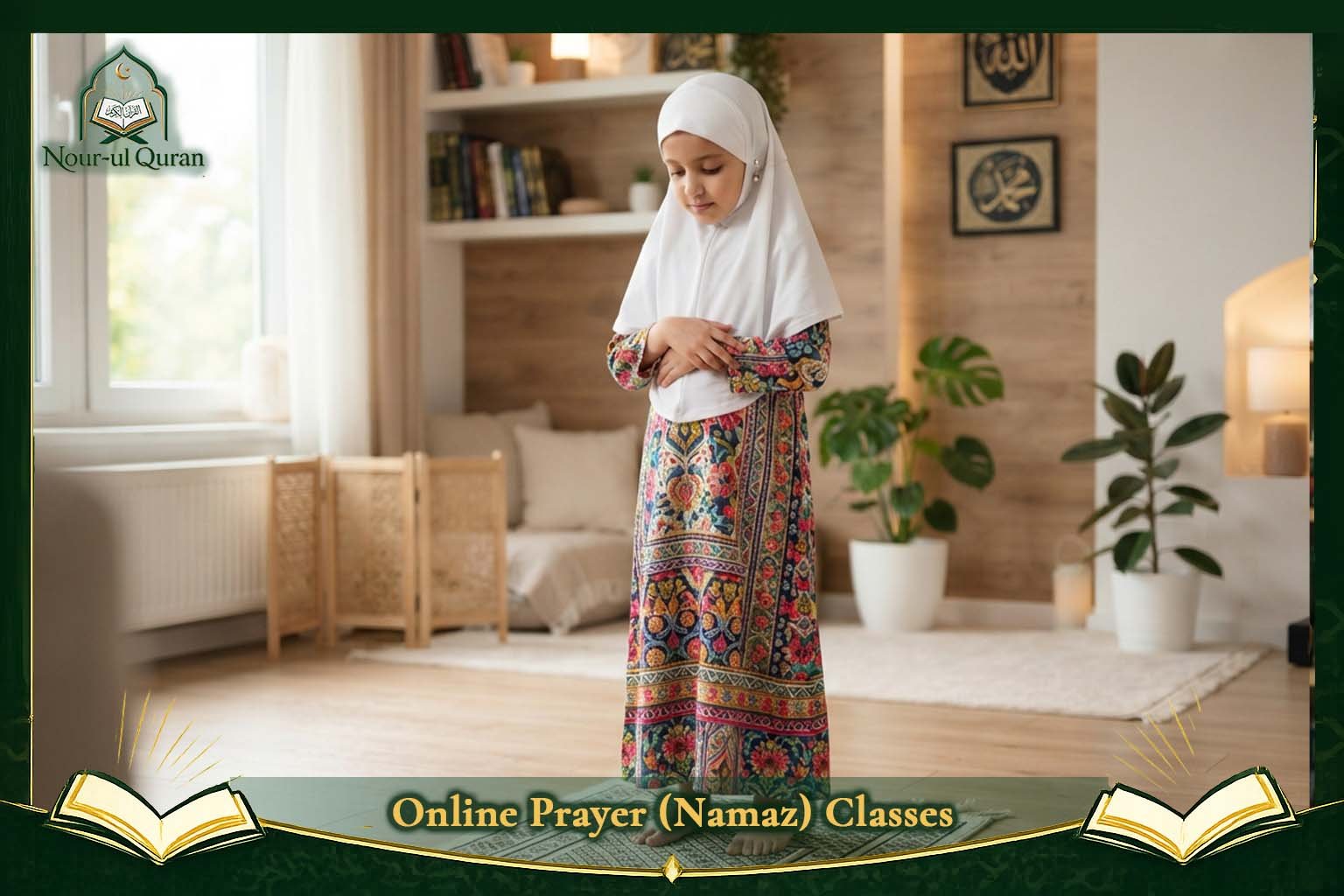
Online prayer namaz classes give students a structured path to learning the five daily prayers correctly, from posture to pronunciation. Many adults grew up praying informally, picking up movements and words from family without ever receiving direct correction.
Children starting fresh often need the same structured guidance, just from an earlier point. At Nour ul Quran Academy, tutors teach namaz step by step, covering both the physical movements and the recited words behind them.
This article explains what these classes cover, how sessions are structured, and who benefits most from dedicated prayer instruction. It also addresses common questions families ask before enrolling.
Why Structured Prayer Instruction Matters?
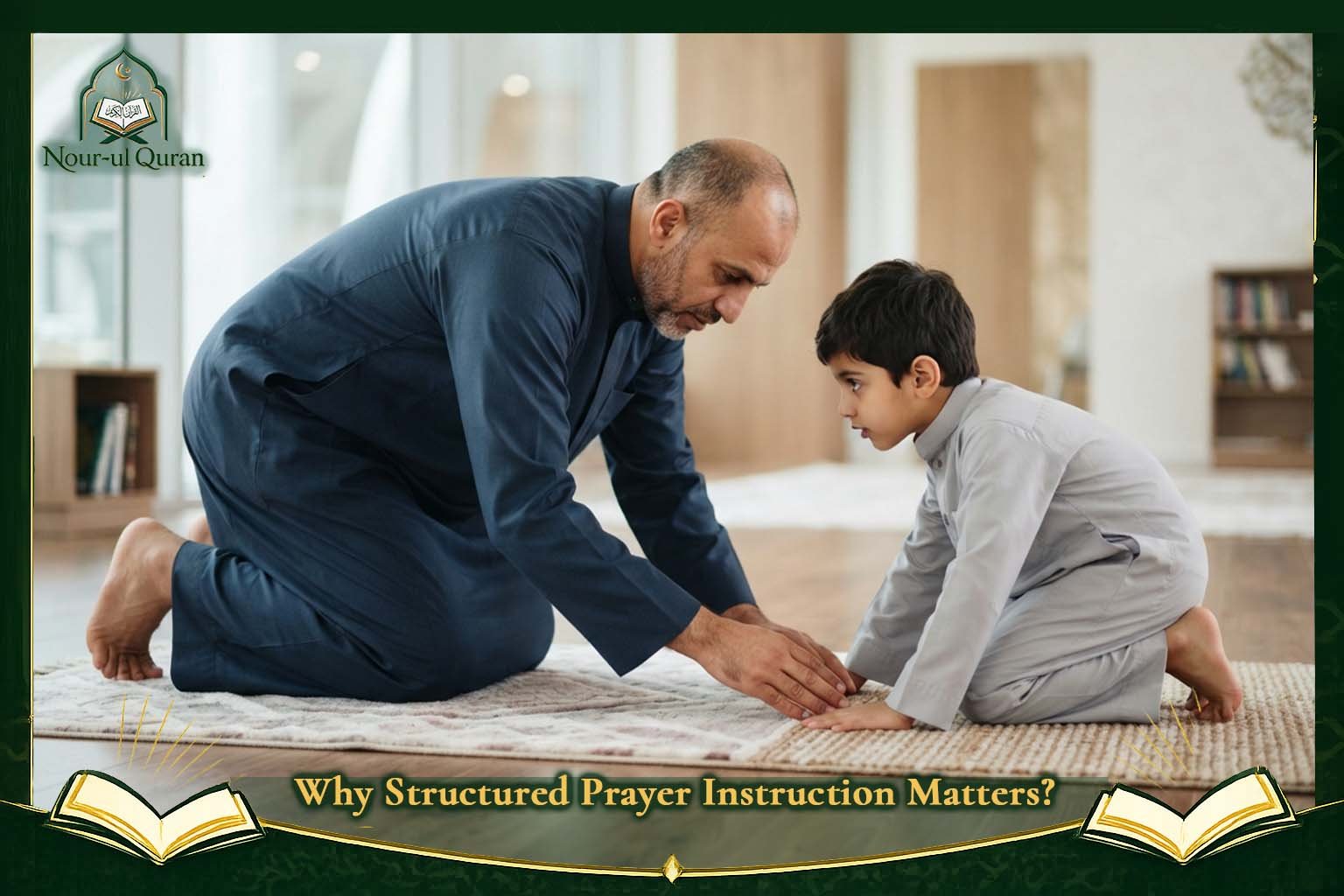
Prayer combines physical movement, spoken recitation, and inward focus, and errors can appear in any of these three areas. In fact, many people never receive explicit correction, since prayer is often learned informally by watching others rather than through direct teaching.
As a result, small errors in recitation or movement can persist for years without anyone pointing them out. Therefore, structured instruction addresses all three components deliberately, rather than assuming correct practice develops naturally through observation alone.
Learn How to Perform Namaz Correctly Online
Master the essentials of prayer with Online Prayer (Namaz) Classes at Nour Ul Quran Academy. Our qualified tutors guide students through the steps of Salah, including preparation, movements, recitations, and essential prayer rules.
The lessons are designed for beginners as well as learners who want to correct or improve their existing practice. With flexible online sessions, you can learn comfortably from home and receive guidance based on your individual level. Start your classes today and build confidence in performing your daily prayers correctly and consistently.

What Online Prayer Namaz Classes Actually Cover?
Lessons begin with the physical positions of prayer, including standing, bowing, and prostration, explained step by step. Alongside movement, students learn the specific verses and phrases recited at each stage of the prayer.
Tutors also cover the conditions that make a prayer valid, such as purification and facing the correct direction. Timing considerations, including how prayer windows work throughout the day, round out the core curriculum.
- Correct physical positions for each stage of prayer
- Recited verses and phrases matched to each specific stage
- Conditions for a valid prayer, including purification
- Understanding daily prayer timing and windows
How Sessions Are Structured for Different Ages?
-
Teaching Children the Basics: Young children start with the shortest, simplest prayers, building gradually toward the complete five daily prayers over time. Visual demonstration and repeated practice work better for this age group than lengthy verbal explanation alone.
-
Correcting Adults Who Learned Informally: Adults often arrive with an existing routine that needs gentle correction rather than starting completely from scratch. Tutors identify specific errors first, then focus correction efforts on those points rather than re-teaching everything from the beginning.
Common Errors Tutors Notice During Instruction
Certain errors appear repeatedly among students who learned prayer informally without direct correction. For example, rushed pronunciation of recited verses, shortened pauses between movements, and incorrect hand positioning all appear frequently.
Instead, tutors address these calmly, treating each correction as a normal part of learning rather than a criticism of prior practice. Consequently, most students find these corrections easy to apply once clearly and specifically identified.
Understanding the Meaning Behind Recited Verses
Beyond correct pronunciation, understanding what is actually being recited during prayer deepens the overall experience considerably. Many of the phrases recited during namaz come directly from the Quran or established supplications.
Tutors explain this meaning alongside pronunciation, rather than treating recitation as sound without content. Students who understand these meanings often describe feeling more genuinely present and focused during their daily prayers.
How This Course Supports New Muslims?
Reverts building their prayer practice from complete scratch benefit enormously from patient, structured, step-by-step instruction. Unlike students correcting existing habits, new Muslims can build correct practice from the very first lesson without any unlearning required.
Tutors experienced with new Muslim students explain not just the how but also the why behind each element of prayer. This context helps new Muslims connect quickly and meaningfully with a practice that may otherwise feel unfamiliar at first.
- New Muslims build correct habits from day one, with no unlearning needed
- Tutors explain the reasoning behind each element, not just the mechanics
- Sessions move at a pace matched to genuinely new information
- Ongoing support continues well beyond the initial basic lessons
How Progress Gets Measured in Prayer Classes?
Tutors track progress by observing a student's complete prayer performance during live video sessions regularly. Improvement typically appears first in movement accuracy, followed later by recitation fluency and correct pacing.
Families receive periodic updates highlighting specific strengths and areas still needing continued practice and attention. This ongoing feedback loop keeps both students and families genuinely informed about real progress being made.
Balancing Correction With Encouragement
Constant correction without any positive acknowledgment can discourage students, particularly adults revisiting a long-practiced routine. Tutors deliberately balance pointing out errors with genuine praise for what a student already does correctly.
This balance keeps sessions feeling constructive and encouraging rather than purely critical throughout an entire lesson. Students who feel encouraged alongside corrected tend to progress more quickly than those facing constant, unbalanced criticism.
How to Get Started With Prayer Classes?
Enrollment starts with a short conversation covering current prayer knowledge and specific goals for improvement. From there, a tutor builds a starting point suited to exactly where a student currently stands. Interested families can explore our online prayer namaz classes and begin building correct, confident prayer practice with a qualified tutor.
How Families Reinforce Learning Between Sessions?
Parents can support young learners by praying alongside them at home, reinforcing what was covered in the most recent lesson. Adults benefit from a brief personal review of corrected points before their next prayer, rather than waiting until the following session.
This consistent reinforcement between formal lessons accelerates progress considerably compared to relying on weekly sessions alone. Small, regular practice moments throughout the week compound meaningfully over just a few months.
Why Consistency Matters More Than Intensity?
A single long session focused on prayer correction rarely produces lasting change by itself. Shorter, regular sessions paired with daily practice tend to build lasting habits more effectively than occasional intensive review.
This mirrors how habit formation generally works across many other areas of learning. Families balancing busy schedules often find that steady, modest weekly progress outperforms sporadic, ambitious catch-up sessions.
How Nour ul Quran Academy Structures Long-Term Prayer Study?
Nour ul Quran Academy treats prayer instruction as an ongoing relationship, not a short course with a fixed end date. Therefore, tutors continue refining pronunciation and movement well after a student learns the basic structure.
Additionally, periodic review sessions revisit earlier corrections, since habits can quietly drift back over time without reinforcement. Consequently, students who continue past the initial basics tend to retain correct practice far more reliably than those who stop early.
Why Video-Based Instruction Works Well for Prayer Correction?
Unlike some subjects, prayer correction depends heavily on a tutor actually observing physical movement, not just listening to recitation. Video sessions allow a tutor to watch posture, hand placement, and movement timing directly, much as an in-person lesson would.
Moreover, recordings can occasionally be reviewed afterward, helping a student notice details a tutor pointed out live. As a result, online instruction for prayer correction often proves just as effective as meeting in person, without the added travel.
Fitting Prayer Correction Into a Busy Household

Families often worry that adding formal prayer instruction will overload an already full weekly schedule. However, sessions are typically brief, since correcting an existing routine takes less time than building a skill from nothing. Furthermore, practice happens naturally five times daily anyway, so reinforcement folds directly into an existing routine rather than requiring extra time.
Similarly, siblings can often be scheduled back to back, reducing the overall time a family spends coordinating separate lessons. Ultimately, this practical structure is precisely why so many families find prayer correction easier to sustain than expected.
Frequently Asked Questions
The sections above cover curriculum content, session structure, and how progress is tracked. A few additional questions come up often once families and adult students consider enrolling. These answers address points not covered earlier.
Is it embarrassing to take prayer classes as an adult?
Not at all. Many adults enroll specifically to correct habits practiced for years, and tutors treat this as a completely normal, constructive step rather than something requiring any embarrassment.
How long does it typically take to learn all five daily prayers?
This varies by age and prior familiarity, though many students learn the core structure within a few months, with ongoing refinement continuing naturally over a longer period afterward.
Can these classes help with prayer performed in a language I do not fully understand?
Yes, tutors explain the meaning of recited verses in English throughout, helping students understand exactly what they are reciting during each stage of prayer.
Do children need to know Arabic before starting prayer lessons?
No, tutors teach the specific short verses used in prayer directly, without requiring broader Arabic language study as a prerequisite for these particular lessons.
What if I already pray but suspect some parts are incorrect?
This is one of the most common reasons adults enroll, and a tutor will observe your current practice first to identify exactly which specific points need correction.
Are these classes suitable for someone who has never prayed before at all?
Yes, sessions for complete beginners start from the very basics, building understanding and confidence gradually before introducing the complete five daily prayers.
In conclusion, online prayer namaz classes give students the structured, direct correction that informal learning often never provides. Nour ul Quran Academy covers movement, recitation, meaning, and validity conditions together, rather than treating prayer as one isolated skill.
Children building foundational habits, adults correcting long-held routines, and new Muslims starting fresh all benefit from this structured approach.
Consistent practice between sessions, paired with patient tutor correction, produces the most lasting improvement over time. Enrolling now moves your daily prayer practice toward genuine confidence and correctness.