

Ramadan quran classes online offer a unique way to channel the month's natural motivation into real, lasting progress. Ramadan brings a surge of energy toward the Quran for many families. That energy can fade fast without a clear structure to hold it.
At Nour ul Quran Academy, dedicated Ramadan programs exist specifically to capture this momentum properly. This article explains what to expect from these classes. It covers scheduling, goals, and how the experience differs from a regular term. By the end, you will know exactly what to look for before enrolling yourself or your child.
Why Ramadan Is a Unique Time for Quran Study?

Beyond its spiritual significance, Ramadan often shifts daily routines noticeably. Many people find more mental space for reflection during this month. Programs built around Ramadan try to capture this heightened motivation directly.
Group classes especially benefit from this shared sense of purpose. Students often work toward similar goals together, like finishing a set number of pages. This shared momentum can feel more motivating than studying entirely alone throughout the month.
Make Your Ramadan More Meaningful with Quran Classes
Ramadan is a special opportunity to increase your connection with the Quran through consistent reading, recitation, and learning. With Ramadan Quran classes online from Nour Ul Quran Academy, you can study from home with flexible lessons designed to help you make the most of this blessed month.
Whether you want to improve your recitation, revise what you have memorized, or deepen your Quranic knowledge, our teachers are here to support you. Join our online Ramadan Quran classes and make the Quran an essential part of your Ramadan journey.

What a Typical Ramadan Quran Classes Online Schedule Looks Like?
Scheduling during Ramadan usually looks different from the rest of the year. Fasting, family iftar time, and taraweeh prayers all shape the calendar. Many academies shift to shorter, more frequent daily sessions during this period.
Energy levels fluctuate throughout a fasting day, so shorter sessions tend to work better. Classes are often scheduled to avoid the hour right before iftar specifically. That particular time tends to bring the sharpest drop in energy and focus.
- Shorter sessions spread across more days each week
- Scheduling that avoids the low-energy hour before iftar
- Flexibility to shift times around family iftar plans
- Built-in room for occasional rescheduling around travel or guests
Common Ramadan-Specific Learning Goals
-
Completing a Juz or Portion of Memorization: A common Ramadan goal involves memorizing a specific juz by month's end. Classes structure daily incremental progress toward that clear, defined target. This works well because the goal feels concrete and genuinely achievable within thirty days.
-
Reviewing and Polishing Existing Recitation: Other students use Ramadan specifically for review rather than new memorization. They use the concentrated study time to fix long-standing tajweed habits instead. This approach suits students who already know plenty of material but want it more polished.
How Online Classes Handle the Fasting Schedule?
One major advantage of online Ramadan quran classes online over in-person options is scheduling flexibility. A family can adjust timing quickly if energy or plans shift mid-month.
This flexibility is much harder to arrange with a fixed physical class location. Rescheduling a single missed session also tends to happen faster online. There is no commute or physical logistics standing in the way of a quick adjustment.
What Parents Should Expect When Enrolling Children?
Children experience Ramadan differently than adults in several important ways. Some participate in partial fasting, which can affect their energy levels noticeably. A good Ramadan program adjusts expectations accordingly for younger students.
It avoids pushing the same intensity used during a regular school term. Setting a genuinely achievable goal, rather than an overly ambitious one, helps children finish the month feeling proud rather than discouraged.
- Watch for signs of fatigue tied to disrupted sleep schedules
- Set goals sized appropriately for a child's actual capacity
- Celebrate small wins throughout the month, not just the final result
- Stay flexible if energy dips partway through the fasting month
How to Choose the Right Ramadan Program?
Not every academy runs a dedicated Ramadan program at all. Among those that do, offerings vary significantly in structure and intensity. Look specifically for programs mentioning adjusted scheduling around fasting hours.
Look also for clear, time-bound monthly goals rather than vague general encouragement. Tutors experienced with Ramadan's unique rhythm tend to produce noticeably smoother sessions overall.
How This Differs From a Regular Enrollment Term?
Families used to year-round enrollment sometimes find Ramadan programs surprisingly different. Built-in flexibility for travel and family gatherings is far more common during this month. Regular classes focus mostly on technical skill, like tajweed accuracy or memorization speed.
Ramadan programs often weave in more reflection and discussion of meaning alongside the technical work. This blend recognizes that Ramadan carries emotional and spiritual weight beyond pure skill-building alone.
What Happens if You Fall Behind Mid-Ramadan?
Falling behind partway through the month is completely normal, even with good planning. Illness, travel, or simple fatigue can all disrupt an otherwise solid schedule. A good tutor recalibrates the goal realistically rather than pushing a student to catch up rapidly.
Rushing to compensate often causes burnout during an already demanding month. The real point of Ramadan quran classes online is sustainable, meaningful progress, not rigid adherence to an original plan regardless of circumstances.
Continuing the Momentum After Ramadan Ends
Maintaining progress after Ramadan's heightened motivation naturally fades presents a real challenge. Without a deliberate plan, gains made during the month can gradually slip away. The best approach scales down intensity rather than stopping suddenly and completely.
Moving from daily short sessions back to a regular weekly schedule works well for most families. Continuing to review newly memorized material keeps that Ramadan effort paying off well beyond the month itself.
Preparing Mentally Before Ramadan Begins
Preparation before the month starts often matters as much as the schedule itself. Taking time to set a realistic personal or family goal helps considerably. A goal that stretches ability without feeling impossible sustains motivation better than an overly ambitious one.
Discussing the proposed schedule as a family also helps, especially with multiple children enrolling together. This conversation surfaces potential conflicts early, whether that means overlapping iftar duties or competing screen-time needs among siblings. A few minutes of planning before Ramadan begins tends to prevent frustration once the busy month is already underway.
Balancing Ramadan Classes With Increased Worship Time
Ramadan naturally increases time spent on taraweeh, extra recitation, and general reflection. This can make an already busy month feel even more packed with commitments. Rather than treating Quran classes as separate from this broader worship, many families find it helpful to view them as connected.
A class reviewing a juz being recited during taraweeh reinforces both activities simultaneously. This overlap reduces the feeling of competing demands on limited time and energy.
Tutors familiar with this dynamic often coordinate lesson content loosely around what a family is already reciting during nightly prayers, creating a more unified experience throughout the month rather than two disconnected commitments.
Handling Multiple Children With Different Needs During Ramadan
Families with more than one child often face a scheduling puzzle during Ramadan specifically. A younger child might need a lighter, shorter program, while an older sibling pursues a more ambitious memorization goal.
Trying to force both children into an identical schedule usually satisfies neither one well. Instead, many families find success staggering session times slightly, giving each child individual attention suited to their specific pace.
This requires a bit more coordination upfront, but tends to produce a noticeably smoother, less stressful month for the whole household compared to a one-size-fits-all approach applied across very different ages and abilities.
A Few Practical Reminders for a Smoother Month
Keep expectations realistic from the start. Progress does not need to be dramatic to count. Small, steady steps add up over thirty days. Stay in close contact with your tutor throughout the month.
A quick message about a scheduling conflict prevents bigger problems later. Above all, remember the goal is connection, not perfection. A slightly smaller goal met consistently beats a large one abandoned halfway through.
How Nour ul Quran Academy Structures Ramadan Programs?
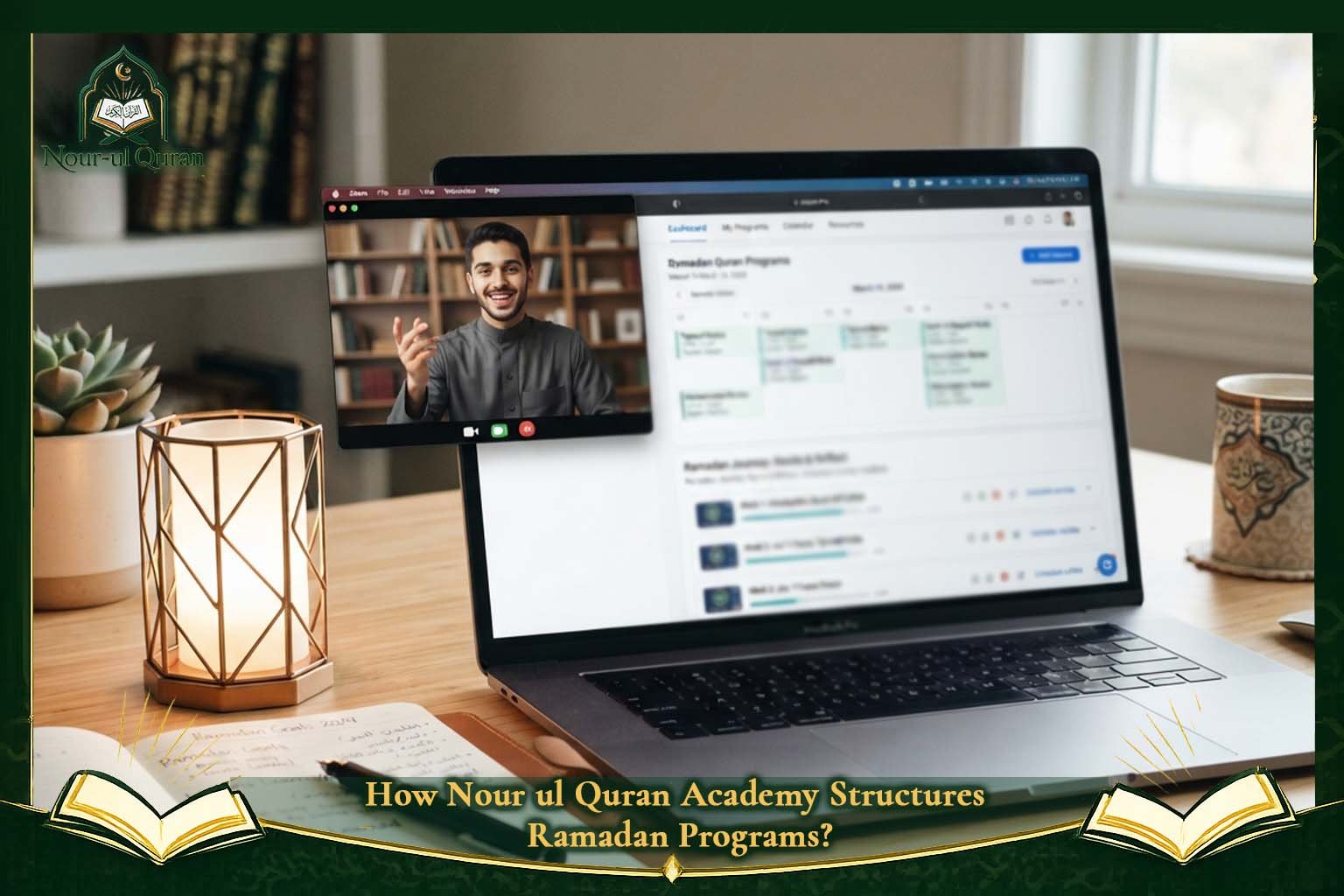
Nour ul Quran Academy designs its Ramadan program specifically around the month's unique demands. Tutors receive guidance on pacing sessions appropriately for fasting students of every age.
Flexible rescheduling is built into the program from the very start, not offered only as an exception. Families interested in getting started can explore our beginner course or our kids' Quran classes ahead of the coming Ramadan season.
Frequently Asked Questions
The sections above cover scheduling, goals, and how Ramadan programs differ from regular enrollment. A few additional questions come up often as families plan ahead for the month. These answers cover points not addressed in detail earlier.
Do Ramadan classes cost more than regular classes throughout the year?
This varies by academy specifically. Some offer special Ramadan packages at standard rates, while others adjust pricing slightly for intensive programs, so it is worth asking directly before enrolling for the month.
Can complete beginners start during Ramadan, or is it only for continuing students?
Beginners are genuinely welcome to start during Ramadan. Many academies actually see increased beginner enrollment specifically because of the heightened motivation the month naturally brings to new and returning students alike.
What happens to my schedule once Ramadan officially ends?
Most academies transition students back to a regular weekly schedule shortly after Ramadan, often using the momentum built during the month to help establish a more sustainable, ongoing routine going forward.
Should siblings share one Ramadan class or attend separately?
This depends on age gap and current level, much like it would during a regular term. Similarly-aged siblings sometimes benefit from shared motivation, while a wide gap usually works better with separate sessions.
Is it worth setting a Ramadan goal if my schedule is genuinely unpredictable?
Yes, though the goal should stay modest and flexible rather than rigid. Even a small, consistently met goal produces more lasting benefit than an ambitious target abandoned partway through an unpredictable month.
How early should I enroll before Ramadan actually begins?
Enrolling two to three weeks before Ramadan starts generally allows enough time for placement, tutor matching, and initial goal-setting, so the first official day of the month can begin smoothly without administrative delays.
In conclusion, Ramadan quran classes online offer a genuine opportunity to channel a uniquely motivated month into real, lasting progress. Adjusted scheduling, realistic goals, and built-in flexibility all matter more during Ramadan than during a typical enrollment term.
Falling behind mid-month is normal and manageable with the right tutor guiding the recalibration. Nour ul Quran Academy builds these considerations directly into how its Ramadan programs are structured every year. Starting now, before the month begins, gives you the best chance of making this Ramadan a genuinely productive one.

Add New Comment