

Common mistakes when learning Quran recitation often creep in quietly. A student rarely notices them at first. A beginner might shorten a vowel sound for months. Or skip a subtle pause without realizing it.
Usually, no one has pointed it out yet. At Nour ul Quran Academy, this exact pattern shows up again and again. It happens among new students of every age.
This article walks through the errors that appear most often. It also explains why they take hold so easily. Then it covers what genuinely helps fix them for good. The goal is not to overwhelm you. Instead, it offers a clear, practical map you can use right away.
Why Small Recitation Errors Are Easy to Miss?
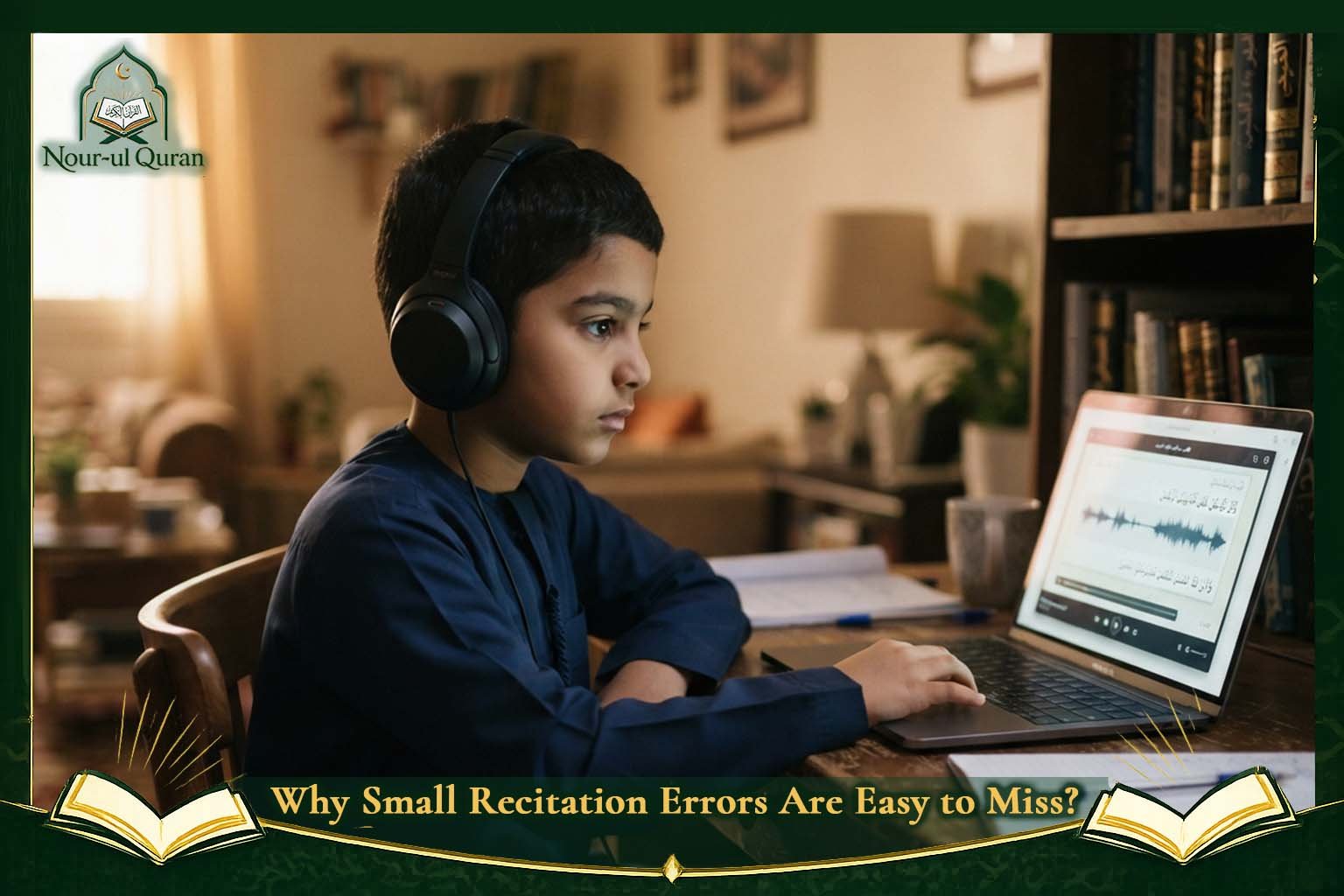
Most recitation errors are not dramatic. They are small habits that sound almost right. That is exactly why they survive so long. A student might shorten a vowel that should be held longer.
Or blend two letters that should stay distinct. Because these sounds are close to correct, they rarely draw attention. This happens even during careful practice at home. Parents often lack the specific training to catch such details. They may listen closely and still miss the error. As a result, an early habit can quietly continue for years.
Many students also learn mainly by imitation. They repeat a parent, a sibling, or a recording. Imitation works fine for general rhythm and flow. However, it rarely catches the fine distinctions tajweed requires.
Consequently, the same small error gets copied again and again. This is why a fresh, trained ear matters so much. Waiting too long to seek feedback tends to make correction harder.
Avoid Common Quran Recitation Mistakes
Recognizing the Common Mistakes When Learning Quran Recitation is an important step toward improving accuracy and confidence. At Nour ul Quran Academy, experienced Quran teachers help students identify and correct recitation errors through personalized online lessons. Start improving your recitation today with expert guidance and consistent practice.

The Most Common Mistakes When Learning Quran Recitation
Certain patterns show up far more often than others. Some are pronunciation-based. Others relate to rhythm and timing. A few come simply from rushing through unfamiliar verses. Recognizing these patterns early makes correction much faster. A tutor can target the exact habit instead of guessing.
Below is a practical list of the most frequent errors. They appear often among both new and returning students. None of these mistakes reflect a lack of effort. Most simply reflect a lack of specific feedback at the right time. Understanding them is the first step toward genuine confidence. It also builds real accuracy, not just memorized sound.
- Shortening a Madd, or elongation, that should be held longer
- Merging letters such as Dhal and Zay that sound similar
- Skipping a required pause, or Waqf, between two verses
- Applying Ghunnah, or nasalization, inconsistently on Noon and Meem
- Rushing through unfamiliar words instead of sounding them out slowly
- Reciting from memory without checking pronunciation against the text
- Ignoring Qalqalah on specific letters at the end of a word
- Practicing only familiar sections while quietly avoiding weaker areas
How These Errors Take Root Over Time?
A mistake can appear for one reason. It can stay for a completely different reason. Two patterns explain most long-term recitation errors. Both deserve a closer look below.
Skipping Noorani Qaida Fundamentals
Many students move into full recitation before finishing Noorani Qaida. Progress can feel slow, so everyone wants to reach real verses sooner. However, Noorani Qaida builds accurate letter recognition first.
It also builds basic pronunciation before rhythm is added. Skipping ahead means a student recites on shaky fundamentals. Early gaps do not disappear on their own. Instead, they transfer forward into every future lesson.
Relying on Imitation Instead of Correction
Listening and repeating is a natural way to learn. Yet it carries one clear limitation. A student can only copy what they actually hear. This includes any error already present in that source. Without a tutor checking pronunciation directly, imitation repeats the same mistake. This is why real correction needs more than repetition alone. It needs someone qualified to notice the exact gap. That gap sits between what was said and what should be said.
Why a Qualified Tutor Changes the Outcome?
A trained tutor listens differently than a parent or peer. They are specifically checking for accuracy, not just following along. At Nour ul Quran Academy, tutors pause at the exact moment an error occurs.
They do not wait until the end of a passage. This timing matters enormously. An immediate correction creates a much stronger memory link. A correction offered minutes later works far less effectively. A qualified tutor also explains the rule behind each correction.
They do not simply say try that again. Instead, they explain why a letter needs more emphasis. Or why a vowel must be held longer. This explanation helps the rule apply to other verses too. It does not just fix one word in isolation. Consistent feedback across sessions reveals deeper patterns as well.
Some errors only appear at certain speeds or letter combinations. Over time, this feedback loop is what separates lasting change. It stands apart from a quick fix that fades within a week.
Practical Habits That Prevent Recurring Mistakes
Tutor correction matters, but daily habits matter just as much. Students who practice deliberately retain corrections far longer. Simply repeating verses on autopilot rarely helps in the long run.
The habits below are simple and need no special equipment. They fit easily into a short daily routine. None of them demand extra class time. They simply make existing practice more effective overall. Consistency matters more than intensity here. A few focused minutes each day beat one long weekly session.
- Recording a short recitation weekly and listening back critically
- Practicing new verses slowly before reciting at normal speed
- Reviewing previously corrected mistakes, not only new material
- Reading along with a verified recitation to compare pronunciation
- Asking a tutor to explain the reasoning behind each correction
- Avoiding long gaps between sessions, even short daily practice helps
What Real Progress Looks Like Week to Week?
Progress rarely feels dramatic while it is happening. It shows up in small, quiet ways instead. A student might hold a Madd correctly on the first try. Or catch their own mistake before a tutor even mentions it. That self-correction is actually a strong sign of real progress. It means the rule has started to move from memory into instinct.
Parents sometimes worry when progress feels slow week to week. However, slow and steady correction usually lasts far longer than a quick fix.
A quick fix often fades once attention shifts elsewhere. Tracking progress does not require anything complicated either. A simple weekly note about one improved habit works well. Over a few months, these small notes reveal a clear upward trend.
They also help a tutor decide what to focus on next. Nour ul Quran Academy encourages families to notice these small wins along the way. Celebrating them, even briefly, keeps motivation steady during the longer stretches of practice.
How Nour ul Quran Academy Supports Lasting Correction?

Correcting recitation habits is rarely a one-time event. This is why Nour ul Quran Academy builds ongoing review into every course. Tajweed is never treated as a single, isolated topic.
Each student is matched with a tutor who tracks recurring errors. Sessions build on each other instead of starting fresh every week.
This continuity helps a tutor notice specific patterns. For example, a certain Madd rule might keep slipping in longer verses. The tutor can then target that exact pattern directly. Tutors also balance correction with genuine encouragement.
Students who feel constantly criticized often become hesitant to recite freely. That hesitation, ironically, makes errors harder to catch. Instead, feedback stays calm and specific. Each session usually focuses on just one or two points. As a result, students build accuracy and confidence together.
Neither one gets sacrificed for the other. Families exploring where to begin can start with a short placement conversation. Nour ul Quran Academy uses this step to place each student at the right level.
Frequently Asked Questions
The sections above cover the most common recitation mistakes and how tutors typically correct them. A few related questions come up often among parents and adult students. The answers below cover practical concerns not addressed in detail earlier.
At what age should a child's recitation mistakes start being corrected formally?
Formal correction can begin as soon as a child reads independently, often around age five or six. Waiting longer is not harmful on its own. However, earlier feedback tends to prevent habits from becoming deeply ingrained, which usually makes the entire correction process shorter and noticeably less frustrating for everyone involved.
Can regional accents affect tajweed accuracy?
Regional accents mainly affect general speech patterns. They rarely change core tajweed rules, since articulation points and elongation counts stay fixed regardless of accent. However, a strong accent can sometimes mask a genuine pronunciation error, which is exactly why tutor feedback still matters even for confident, fluent speakers.
Is it normal to regress after correcting a mistake?
Yes, temporary regression is common and does not signal failure. A newly corrected habit often competes with the older, more familiar pattern for a short period. This is especially true under pressure or at faster recitation speeds, before the new correction fully settles into automatic memory.
Should students avoid reciting in front of others while still correcting mistakes?
No, occasional recitation in front of family or peers is actually encouraged. It reveals how well a correction holds up outside a controlled lesson setting. Avoiding all practice under mild pressure can slow real progress by removing a useful, low-stakes test of genuine retention.
How often should recitation be reviewed with a tutor to prevent backsliding?
Weekly review is generally enough for most students, provided each session includes a few minutes on previously corrected material. Longer gaps between reviews raise the chance that an old habit quietly returns before anyone notices it happening again.
Do memorization students face different mistakes than reading-only students?
Memorization students often develop mistakes tied to rhythm and repetition speed, since verses repeat many times quickly during drills. Reading-only students, by contrast, tend to struggle more with unfamiliar or rarely practiced verses, since their exposure to those specific passages stays fairly limited overall.
In conclusion, common mistakes when learning Quran recitation rarely reflect low effort. They almost always reflect missing feedback at the right moment. Small habits, like a shortened elongation or a skipped pause, can persist for years. They often sound close enough to correct during casual listening. The good news is simple.
Every one of these patterns responds well to structured, patient correction. Nour ul Quran Academy focuses precisely on this kind of ongoing, detail-oriented feedback. It helps students move from reciting by habit toward reciting with real, verified accuracy. That shift takes time, but it is fully within reach for any dedicated student.

Add New Comment