
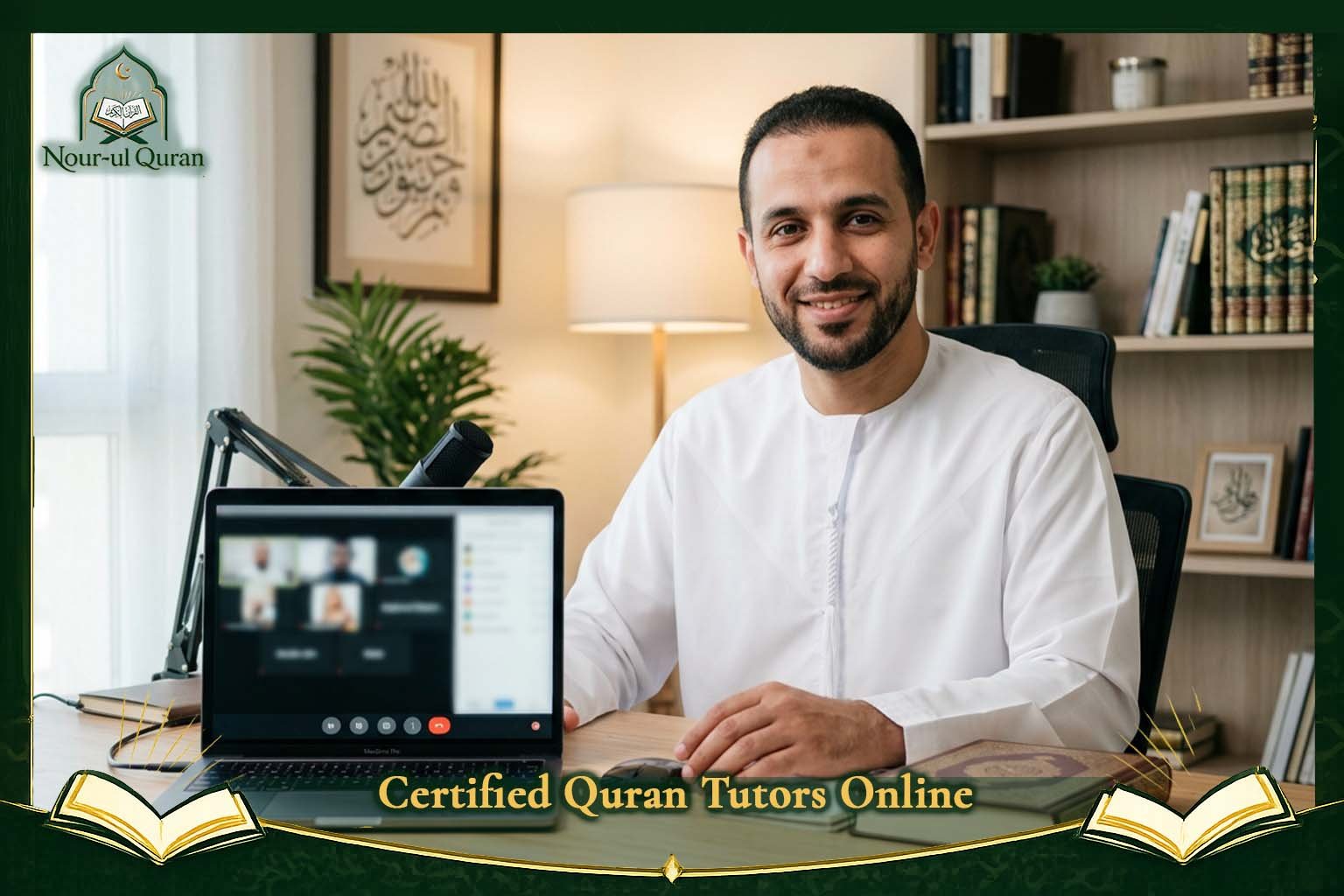
Certified quran tutors online offer something a casual, unverified tutor simply cannot: proof. That proof comes from a formal process, not just a friendly conversation. At Nour ul Quran Academy, certification shapes every hiring decision made.
Many families searching online do not realize how much certification actually varies between tutors. Some hold a genuine ijazah. Others simply claim years of informal experience. This article explains what certification really means, why it matters so much, and how you can verify it yourself. By the end, you will know exactly what questions to ask before enrolling.
What Certification Actually Means for a Quran Tutor?
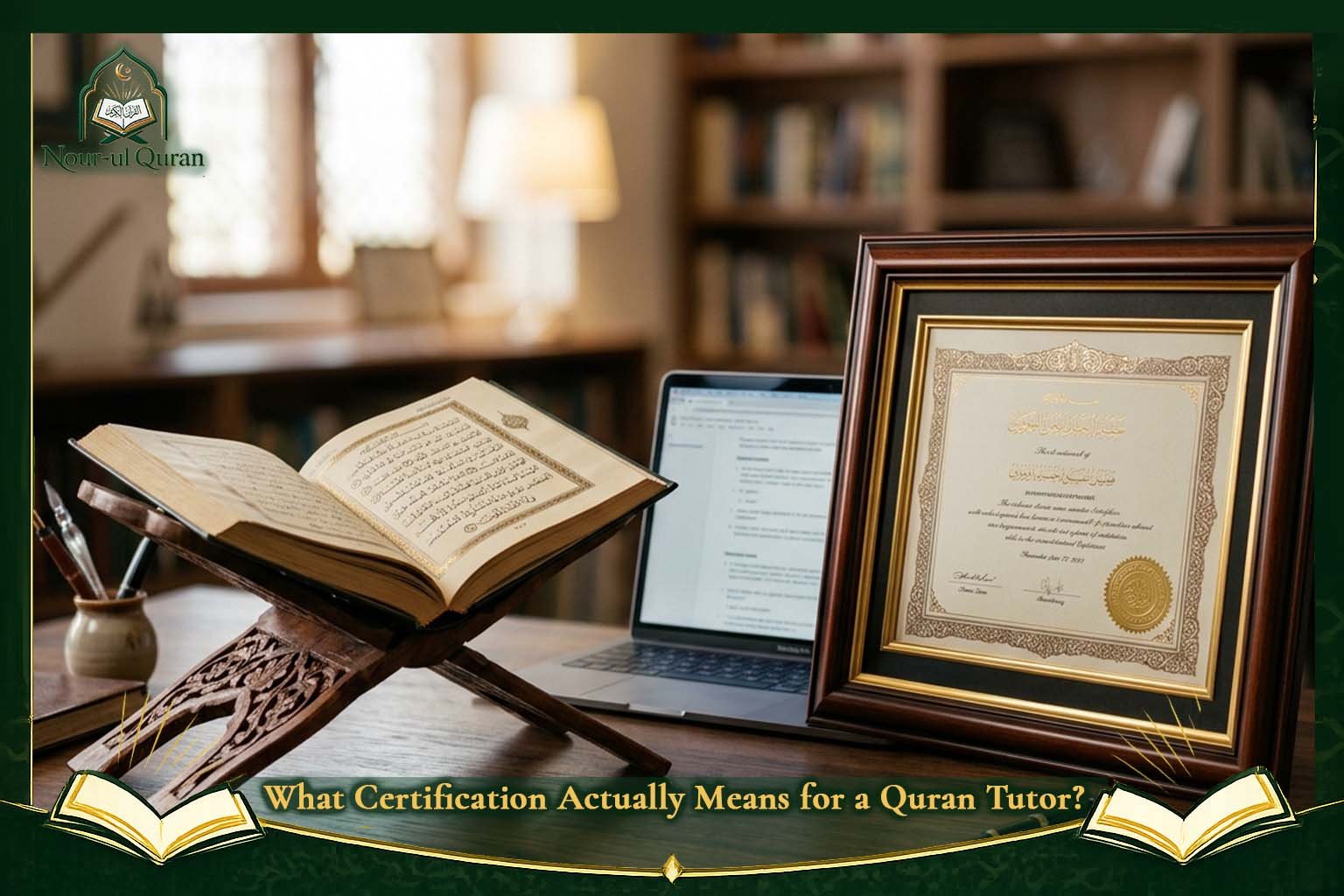
An ijazah is a formal authorization. It confirms a student recited the Quran, or a large portion of it, correctly in front of a qualified scholar. This differs sharply from a general teaching certificate. A teaching certificate might cover lesson planning or classroom management.
An ijazah instead verifies recitation accuracy directly, letter by letter. Both credentials have value. Only the ijazah confirms that a tutor's own recitation has been checked and formally approved by someone qualified to judge it.
Learn Quran with Qualified Tutors Online
Looking for trusted guidance from experienced Quran teachers? At Nour Ul Quran Academy, you can learn the Quran online with qualified and dedicated tutors who provide personalized lessons based on your level and learning goals.
Whether you want to improve your recitation, learn Tajweed, or build a stronger connection with the Quran, our online classes offer flexible learning from the comfort of your home. Enroll today with Nour Ul Quran Academy and start your journey with a certified Quran tutor.
Why Certified Quran Tutors Online Matter So Much?
The internet makes it easy for anyone to present themselves as a qualified teacher. A polished profile picture and a confident tone say nothing about actual recitation accuracy. This is precisely why certification matters more online than it might in a small, tight-knit local community.
In person, reputation often spreads naturally through word of mouth. Online, that natural filtering does not exist in the same way. Certification becomes one of the only objective signals families can rely on when reputation alone is not available.
- Certification confirms recitation accuracy through direct scholarly verification
- It removes guesswork from an otherwise uncertain online search
- It signals ongoing accountability, not just a one-time claim
- It protects against slowly ingrained pronunciation errors going unnoticed
- It gives parents a concrete standard to reference when comparing tutors
How to Verify a Tutor's Certification?
-
Ask About the Certifying Scholar Directly: A genuine ijazah comes from a specific, nameable scholar or institution. Ask who granted it, and roughly when. A confident, specific answer is reassuring. A vague or evasive response deserves further questions before you proceed with enrollment.
-
Request Documentation Where Possible: Many tutors can share a certificate or written confirmation upon request. This does not need to feel confrontational. Framing it as standard due diligence, rather than suspicion, usually gets a straightforward, cooperative response from a genuinely qualified tutor.
The Risk of Choosing an Uncertified Tutor
An uncertified tutor might still be kind, patient, and generally likeable. However, without verification, there is no guarantee their own recitation is fully accurate. Since much of Quran learning happens by listening and repeating, a student can absorb a tutor's small errors without anyone noticing for years.
This risk grows over time rather than shrinking, since early habits tend to become harder to correct the longer they go unaddressed by a qualified tutor.
Certification and Long-Term Trust for Families
Certification offers something beyond technical accuracy. It offers peace of mind. Handing a child's religious education to an online stranger already requires real trust. Knowing that a tutor has been formally verified removes much of the uncertainty from that decision.
It shifts the question from hoping this person is good enough to knowing they have been checked by someone qualified to judge. That shift matters enormously for anxious parents making a first-time enrollment decision.
How Nour ul Quran Academy Verifies Certification?
Rather than leaving verification entirely to families, Nour ul Quran Academy builds it directly into the hiring process. Every tutor's ijazah documentation is reviewed before approval. Their recitation is separately assessed by senior staff as an additional layer of confirmation.
This means enrolling families are not simply trusting a resume. They are trusting a structured process that has already done the verification work in advance, reducing the burden on parents who may not know exactly what to check themselves.
- Documentation review before any tutor is approved to teach
- Independent recitation assessment by senior academy staff
- Ongoing observation after hiring, not just a one-time check
- A clear process for families to raise concerns if something feels off
Certification Alone Is Not the Whole Picture
Certification confirms accuracy, but teaching skill is a separate quality entirely. A certified tutor can still struggle to explain concepts clearly to a young child. Because of this, certification should be treated as a necessary filter, not a complete guarantee of a good fit.
Pairing certification with a trial class gives families the fullest possible picture. The trial reveals communication style and patience, things no certificate alone can confirm. Together, these two checks cover both accuracy and teaching ability in a way that neither one covers alone.
Common Misconceptions About Certification
Some families believe certification is only for scholars, not for everyday recitation teachers. This is simply not accurate. Many certified tutors teach beginners every single day. Others believe certification makes lessons feel overly formal or rigid.
In practice, certified tutors often teach warmly and patiently, exactly like any other good tutor. Certification affects verified accuracy, not personality or teaching style. A third misconception assumes certification costs significantly more without real added value.
Usually, the price difference reflects genuine added screening and accountability, not simply a marketing label. Clearing up these misconceptions early helps families make a more confident, informed choice from the very start of their search.
How Certification Supports Long-Term Recitation Habits?
Small pronunciation habits, once formed, tend to stick around for years. A certified tutor catches these habits early, before they become permanent. They know exactly which sounds and rules deserve close attention during early lessons.
Because of this early attention, students build accurate habits from day one instead of correcting deeply ingrained mistakes later. Over time, this difference compounds. A student taught accurately from the start recites with more natural confidence.
A student who must unlearn old habits often faces a slower, more frustrating correction process years later. Choosing certified quran tutors online early in a child's or adult's journey therefore pays off well beyond the first few months of lessons.
What Sets Nour ul Quran Academy's Certification Process Apart?
Many platforms simply ask tutors to self-report their credentials without further checks. Nour ul Quran Academy takes a noticeably different approach. Every claimed credential goes through independent verification before a tutor ever teaches a paying student.
This extra layer of diligence takes more effort on the academy's part. However, it directly protects families from the risk of relying on an unverified claim. Families enrolling through the academy benefit from this work automatically, without needing to conduct their own separate investigation into every tutor's background and training history.
Getting Started With a Verified Tutor
If you are ready to move forward with certified quran tutors online, a good first step is exploring a structured, verified program rather than searching independently.
Our Ijazah Certification Course connects students directly with fully verified instructors, removing the guesswork from the search entirely. Starting this way saves considerable time compared to independently vetting multiple tutors found through informal channels.
Questions to Ask Before Your First Paid Lesson

A short conversation before enrolling can save considerable frustration later. Ask about certification directly. Ask about experience with students of a similar age or level. Ask how the tutor typically handles a recurring mistake during recitation.
These questions take only a few minutes. They reveal far more than a polished profile ever could on its own. A confident, specific tutor welcomes these questions openly. A hesitant or vague response is worth noting carefully before you commit to a full course of lessons.
Frequently Asked Questions
The sections above cover certification, verification, and hiring standards in detail. A few related questions come up often once families begin comparing specific tutors directly. These answers cover practical points not addressed earlier.
Is an ijazah required for every level of Quran instruction?
Not necessarily for very early reading instruction, such as basic Noorani Qaida lessons. However, for tajweed correction and full Quran recitation, an ijazah becomes considerably more important, since accuracy at that stage directly shapes long-term recitation habits.
Can a tutor hold an ijazah in one qira'ah but not others?
Yes, ijazah certification is often specific to a particular qira'ah, most commonly the widely taught Hafs recitation. A tutor wanting to teach additional qira'at typically needs separate certification for each one they intend to teach formally.
How long does it typically take to earn an ijazah?
Timelines vary considerably based on prior recitation skill and available study time, but the process often takes one to several years of dedicated study under a qualified scholar before formal certification is granted.
Does certification expire or need to be renewed periodically?
An ijazah itself does not expire in a formal sense, since it verifies a specific completed recitation. However, many tutors continue advanced study afterward, which effectively keeps their skills sharp well beyond the original certification date.
Should I trust a tutor who is currently studying for certification but has not finished yet?
This depends on the specific stage of study and the age or level of your student. A tutor deep into advanced study may already teach basics quite well, though verified, fully certified tutors remain the safer choice for advanced recitation correction.
Are certification standards the same across every country or region?
Broadly similar in principle, since the core requirement involves scholarly verification of recitation accuracy. However, specific institutions and processes can vary by region, which is exactly why asking direct questions about a specific tutor's certification path remains valuable everywhere.
In conclusion, certified quran tutors online provide a level of verified trust that an unchecked tutor simply cannot match. Certification confirms recitation accuracy through a formal, scholarly process, not just a confident claim. Verifying it yourself takes only a few direct questions and, ideally, a short trial class.
Nour ul Quran Academy builds this verification directly into its hiring process, reducing the burden on families who may not know exactly what to check. Taking this extra step upfront leads to a far more confident, reliable learning experience for the whole family.

Add New Comment